
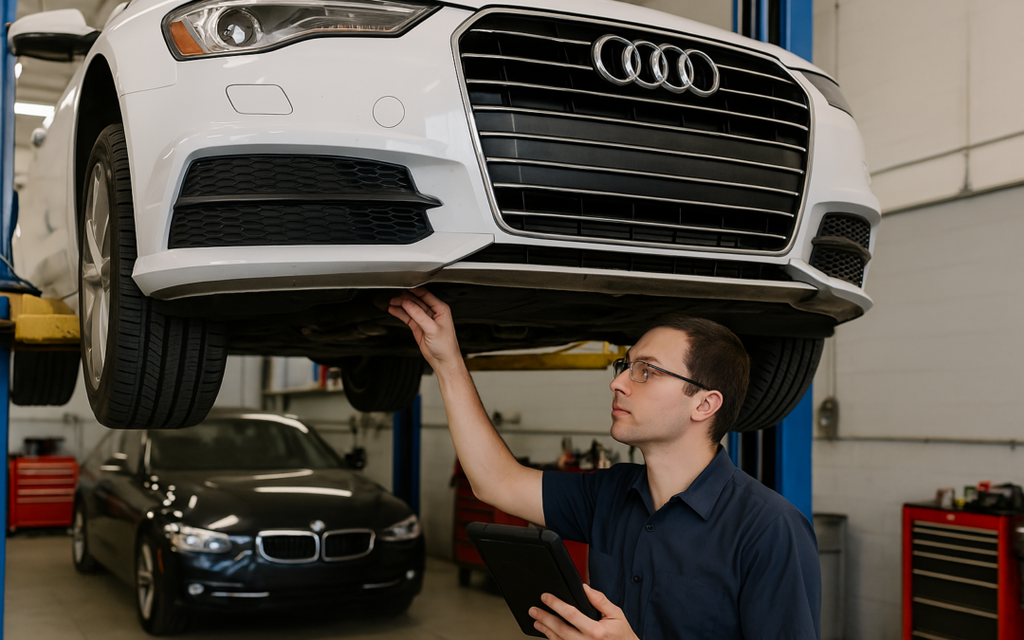
Your European car was not engineered like an Australian or Japanese vehicle. It was designed in a country where autobahns have no speed limit, where precision engineering is a cultural value, and where the relationship between the vehicle and the road is treated as something worth investing in. That engineering philosophy produces cars that feel different to drive, perform differently under stress, and age differently over time.
It also produces cars that fail differently. And when a European vehicle develops a fault, diagnosing it accurately and repairing it correctly requires knowledge, equipment, and experience that most general workshops simply do not have.
This is not a criticism of general mechanics. A good general workshop handles everyday vehicles competently. But European vehicles are not everyday vehicles. They use proprietary software systems, brand-specific diagnostic protocols, specialised fluids and lubricants, tighter tolerances, and integrated electronics that link the engine, transmission, braking, suspension, and safety systems in ways that general diagnostic tools cannot fully access.
A European car specialist exists to bridge this gap. They invest in the training, the tools, the software, and the parts supply chains that allow them to service and repair your vehicle to the standard it was built to, without the dealership premium that makes many owners defer maintenance they should not be deferring.
This guide explains what makes European vehicles different from a servicing perspective, what a specialist does that a general mechanic cannot, how to evaluate a specialist, what common problems affect European cars in Australian conditions, and how the right ongoing relationship with a specialist protects both your vehicle’s performance and its value.
What Makes a European Car Specialist Different From a General Mechanic
The difference is not enthusiasm. Plenty of general mechanics admire European cars. The difference is infrastructure: the diagnostic equipment, the technical training, the parts access, and the accumulated brand-specific experience that allow a specialist to work on your vehicle at the level it demands.
Diagnostic Equipment and Software
Modern European vehicles are controlled by dozens of electronic control units that manage everything from engine performance and transmission behaviour to suspension response, braking intervention, and safety system calibration. BMW, Mercedes-Benz, Audi, Volkswagen, Porsche, and Volvo each use proprietary diagnostic software that communicates with these modules in ways that generic OBD-II scan tools cannot replicate.
A generic scan tool can read basic fault codes. A manufacturer-level diagnostic system can read deep codes, access adaptation values, perform guided diagnostic routines, reset service intervals, code new components, calibrate systems after repair, and perform software updates that general tools cannot execute.
The diagnostic equipment investment for a properly equipped European specialist workshop typically exceeds $50,000 to $100,000 or more when you account for multiple brand platforms, regular software subscriptions, and the calibration tools required for ADAS, transmissions, and electronic suspension systems.
Technical Training and Brand Knowledge
European manufacturers update their vehicles constantly. Engine management calibrations change between model years. Transmission control strategies evolve. New sensor technologies are introduced. Service procedures are revised. And the interaction between systems becomes more complex with every generation.
A European car specialist invests in ongoing training that tracks these changes across the brands they service. This training covers brand-specific diagnostic procedures that differ from one manufacturer to another, service interval requirements and the specific inspection items at each interval, fluid and lubricant specifications that vary by brand, model, and even production year, component replacement procedures that require special tools or specific sequences, and software updates and coding procedures that must be performed after certain repairs.
A general mechanic who services European vehicles occasionally may be competent with basic maintenance. But when a complex fault develops, the depth of brand-specific knowledge is what separates an accurate diagnosis from an expensive guessing game.
Parts Supply and Specification Knowledge
European vehicles are designed to operate with components that meet specific performance standards. Oil viscosity, coolant chemistry, brake fluid specification, transmission fluid type, and even spark plug design are all specified by the manufacturer for a reason. Using the wrong specification can cause premature wear, reduced performance, and in some cases, component failure.
A European car specialist maintains parts supply chains that provide genuine and OEM-quality components at competitive pricing. They know which aftermarket brands meet or exceed the manufacturer’s specifications and which ones fall short. And they understand the nuances, such as which BMW engine requires a specific oil additive package, or which Audi model needs a particular coolant formulation to avoid corrosion in its aluminium cooling system.
Common European Car Problems in Australian Conditions
Australian conditions are harder on European vehicles than the European conditions they were designed for. Higher ambient temperatures, harsher UV exposure, longer distances between services, and road surfaces that vary from smooth highway to corrugated gravel all accelerate wear patterns that European owners need to understand.
Cooling System Stress
European cooling systems are engineered for moderate European climates. Australian summers, particularly in Perth where temperatures regularly exceed 40 degrees Celsius, push these systems harder than their designers intended.
Common cooling system issues in European vehicles include plastic thermostat housings and coolant pipes that become brittle and crack after years of heat cycling, water pump failures accelerated by sustained high-temperature operation, radiator deterioration from prolonged UV exposure and thermal stress, expansion tank failures caused by repeated pressure cycling in hot conditions, and coolant degradation that occurs faster in high-temperature environments.
A European car specialist monitors these components during each service and replaces them proactively based on age and condition, rather than waiting for a catastrophic failure that can cause engine overheating and serious damage.
Electrical System Complexity
European vehicles contain more electronic modules, sensors, wiring, and control systems than most other vehicle categories. A modern BMW or Mercedes-Benz may contain 70 to 100 electronic control units networked together. When one module misfunctions or a communication fault occurs on the network, the symptoms can appear in a completely different system from the one that is actually faulty.
Diagnosing electrical faults in European vehicles requires the ability to access every module on the network, read live data from each one, and trace communication faults back to their source. A general scan tool that reads only the engine and transmission modules will miss faults in the body control module, the comfort module, the gateway module, or the ADAS control units that may be causing the symptoms the owner is experiencing.
Transmission Sensitivity
Many European vehicles use advanced transmission systems that require specialist knowledge. Volkswagen and Audi’s DSG (Direct Shift Gearbox) is a dual-clutch automated manual that requires specific fluid and a defined service interval. BMW’s ZF automatic transmissions, once marketed as “lifetime fill,” are now widely understood to benefit from fluid changes at 60,000 to 80,000 kilometre intervals. Mercedes-Benz’s 9-speed automatic uses a specific fluid and filter that must be changed using the correct procedure.
Transmission servicing that uses the wrong fluid, the wrong procedure, or the wrong fill quantity can cause shift quality problems, premature wear, and in some cases, transmission failure. A European car specialist uses the correct fluid specification, the correct fill procedure, and the correct diagnostic protocol for each transmission type.
Suspension and Steering Wear
European vehicles are typically designed with more sophisticated suspension geometry and tighter steering tolerances than mainstream vehicles. Components such as control arm bushings, ball joints, tie rod ends, and anti-roll bar links wear faster on Australian roads than they would on smooth European surfaces.
The symptoms of worn suspension components in a European vehicle are often subtle at first: a slight vibration through the steering wheel, a minor knock over bumps, or a gradual change in the vehicle’s tracking. A specialist who knows the vehicle recognises these early signs and addresses them before they affect tyre wear, handling, and safety.
ADAS Calibration After Repairs
Modern European vehicles are equipped with Advanced Driver Assistance Systems including autonomous emergency braking, lane keeping assist, adaptive cruise control, blind spot monitoring, and parking assist. These systems rely on cameras, radar sensors, and ultrasonic sensors that must be calibrated to precise specifications.
Any repair that affects the position of these sensors, including windscreen replacement, bumper repairs, suspension work, and wheel alignment, may require ADAS recalibration. A European car specialist has the calibration equipment and the manufacturer-specific procedures to perform this recalibration correctly, ensuring your safety systems function as designed.
How to Evaluate a European Car Specialist
Not every workshop that advertises European car servicing has the same depth of capability. Here is how to distinguish genuine specialists from generalists who happen to accept European vehicles.
Questions to Ask
QuestionWhat the Answer Tells YouWhich European brands do you specialise in?Whether their focus matches your vehicleWhat diagnostic systems do you use?Whether they have manufacturer-level tools or only generic scannersDo you use genuine or OEM-equivalent parts?Whether your vehicle will receive components that meet its specificationsWill my manufacturer warranty be protected?Whether they understand Australian Consumer Law warranty protectionsHow do you stay current with manufacturer updates?Whether they invest in ongoing trainingCan you provide a logbook service stamped to manufacturer standards?Whether they follow the correct service schedule and proceduresWhat is your experience with my specific model?Whether they have hands-on knowledge of your vehicle’s common issues
Australian Consumer Law and Your Warranty
Under Australian Consumer Law, you are not required to service your vehicle at a dealership to maintain your manufacturer warranty. Any qualified repairer who uses appropriate procedures, quality parts, and maintains proper service records can perform warranty-compliant servicing.
This means a European car specialist can service your vehicle from new, stamp your logbook to the manufacturer’s schedule, and maintain your warranty coverage at a cost that is typically 30 to 50 per cent less than the dealership equivalent.
Dealership vs Independent Specialist vs General Workshop
FactorDealershipIndependent SpecialistGeneral WorkshopBrand-specific trainingFactory-trained techniciansOngoing specialist trainingLimited or no brand-specific trainingDiagnostic equipmentFull manufacturer systemsManufacturer-level or equivalentGeneric OBD-II toolsPartsGenuine onlyGenuine and OEM-equivalentAftermarket, variable qualityCost (typical service)$400-$900+$250-$600$150-$350Warranty protectionYesYes (under ACL)Depends on procedures and parts usedPersonal serviceVariable, often large service departmentsTypically smaller, more personalVariableAppointment availabilityOften weeks in advanceTypically shorter wait timesUsually available quickly
The independent European car specialist offers the technical capability of a dealership at the pricing of an independent workshop. For most owners, this combination delivers the best balance of quality, cost, and convenience.
The Services a European Car Specialist Should Offer
A comprehensive European car specialist provides services across the full ownership experience.
Logbook Servicing
Manufacturer-scheduled servicing performed to the exact specifications in your vehicle’s service book. This includes oil and filter changes using the correct specification, fluid checks and replacements at the prescribed intervals, inspection items specific to each service milestone, software service reset through the diagnostic system, and logbook stamping that maintains your service history.
Diagnostic Investigation
When a warning light appears, a noise develops, or the vehicle does not feel right, diagnostic investigation identifies the cause. This goes beyond reading a fault code. It involves interpreting the code in context, performing guided test procedures, reading live data from multiple systems, and tracing the fault to its root cause.
Mechanical Repairs
Engine, transmission, suspension, steering, braking, exhaust, and drivetrain repairs using the correct procedures, tools, and parts for your specific vehicle. European vehicles frequently require special tools for tasks that are straightforward on other vehicles.
Electrical and Electronic Repairs
Fault diagnosis and repair across the vehicle’s electronic network, including module replacement, coding, programming, and software updates.
ADAS Calibration
Camera, radar, and sensor calibration following windscreen replacement, collision repair, suspension work, or any other service that may have disturbed the position of the vehicle’s safety sensors.
Pre-Purchase Inspections
A thorough pre-purchase inspection by a European car specialist identifies issues that a general inspection might miss. Brand-specific fault patterns, known model weaknesses, service history assessment, and electronic system health checks all contribute to a more comprehensive evaluation.
Understanding Servicing CostsTypical Service Cost Ranges (2026)
Service TypeDealershipEuropean SpecialistNotesMinor logbook service$400-$700$250-$450Oil, filter, inspection, resetMajor logbook service$700-$1,500+$450-$900Comprehensive inspection, fluid replacementsBrake pad replacement (pair)$400-$800$250-$500Includes sensor replacement where applicableTransmission service (DSG/auto)$500-$1,000$350-$700Fluid, filter, adaptation resetDiagnostic investigation$150-$300$120-$250Per hour, manufacturer-level diagnosticsSuspension component replacement$300-$800 per item$200-$600 per itemControl arms, bushings, links
Why Deferring Servicing Costs More
European vehicles respond poorly to deferred maintenance. Deferred oil changes allow sludge to accumulate in turbocharger oil feeds, timing chain tensioners, and variable valve timing systems. Deferred coolant changes allow corrosion in aluminium components. Deferred transmission services degrade clutch packs and valve bodies. And deferred brake fluid changes reduce braking performance and corrode ABS components.
The cost of a scheduled service is predictable and manageable. The cost of repairing the damage caused by skipping that service is neither.
Building a Long-Term Relationship With Your Specialist
The most valuable approach to European car ownership is building a relationship with a specialist who knows your vehicle, understands its service history, and can anticipate problems before they become failures.
A specialist who has serviced your vehicle for three or four years knows what has been replaced, what is approaching the end of its life, and what to watch during each inspection. This relationship also supports the vehicle’s resale value. A complete, documented service history from a recognised European car specialist consistently achieves higher sale prices than vehicles with incomplete or general workshop service records.
If you are in Perth and looking for a qualified European car specialist who understands the specific demands of your vehicle, exploring the services available at https://triggsgarage.com.au/ is a practical starting point for connecting with a provider who delivers specialist care without the dealership premium.
Protecting Your Investment
- Follow the manufacturer’s service schedule. Do not extend intervals beyond the recommendation.
- Use the correct fluids and parts. Saving $30 on cheaper oil can cause $3,000 in turbocharger damage.
- Address warning lights promptly. A warning light is your vehicle communicating a problem.
- Budget for ownership costs. European vehicles cost more to maintain than mainstream vehicles. Budget accordingly.
- Keep your service records. A complete history adds thousands to resale value.
- Choose your specialist carefully. The right specialist pays for themselves through accurate diagnosis and avoided costs.
Frequently Asked Questions
Will using an independent European car specialist void my warranty?
No. Under Australian Consumer Law, you are not required to service your vehicle at a dealership to maintain your manufacturer warranty. Any qualified repairer who follows the manufacturer’s service schedule, uses parts that meet the manufacturer’s specifications, and maintains proper service records can perform warranty-compliant servicing. If a warranty claim is rejected solely because the vehicle was not serviced at a dealership, you can challenge that rejection through the ACCC.
How often should a European car be serviced?
Most European manufacturers recommend servicing every 12 months or 15,000 to 30,000 kilometres, whichever comes first. However, many specialist workshops recommend shorter intervals, particularly in Australian conditions where heat, dust, and stop-start driving can accelerate wear. For turbocharged vehicles, shorter oil change intervals of 10,000 to 12,000 kilometres are often recommended to protect the turbocharger and engine internals.
What is the most common problem with European cars in Australia?
Cooling system failures are among the most common issues, driven by the higher ambient temperatures in Australia compared to Europe. Plastic thermostat housings, coolant pipes, expansion tanks, and water pumps all deteriorate faster in sustained heat. Electrical system faults are the second most common category, reflecting the complexity of European electronic systems and the stress that heat and vibration place on wiring, connectors, and sensors.
How much more does European car servicing cost compared to mainstream vehicles?
European car servicing typically costs 30 to 60 per cent more than equivalent servicing on mainstream Japanese or Australian vehicles. A minor service at a European specialist costs $250 to $450, compared to $150 to $250 for a mainstream vehicle. The higher cost reflects the more complex engineering, specialist diagnostic equipment, and more expensive components. However, using an independent specialist rather than a dealership saves 30 to 50 per cent while maintaining the same quality standard.
What should I look for in a European car specialist?
Look for manufacturer-level diagnostic equipment rather than generic scan tools, ongoing brand-specific training, the ability to perform logbook servicing that maintains your warranty, experience with your specific vehicle brand and model, transparent pricing with written quotes before work begins, and a clean, well-equipped workshop that reflects the precision these vehicles demand. Ask which brands they focus on and how they stay current with manufacturer updates.
