
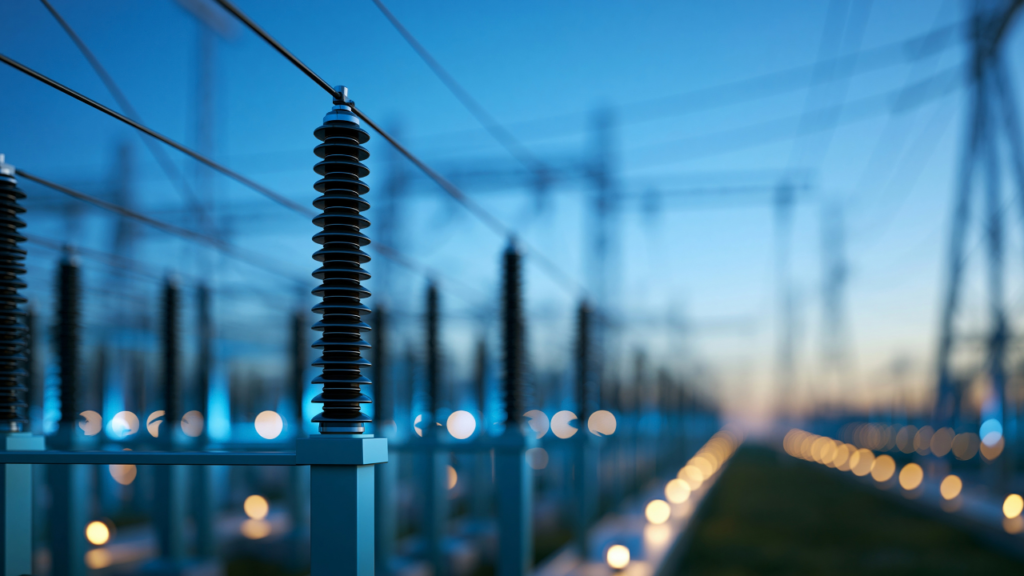
Modernizing the electrical grid is often discussed as a technology challenge. Utilities need new equipment, stronger transmission systems, upgraded substations, and infrastructure capable of handling changing demand. But the success of those projects often depends just as much on planning, coordination, safety, and execution as it does on the technology itself.
That is especially true for large transmission and distribution projects. These jobs can involve multiple contractors, engineering teams, utility representatives, field crews, regulators, and suppliers. A technically sound design can still run into problems if schedules slip, communication breaks down, or risks are identified too late.
The pressure to improve transmission infrastructure is also increasing. In July 2026, the U.S. Department of Energy said there is a pressing need for additional electric transmission infrastructure as demand grows from data centers, domestic manufacturing, large industrial loads, and broader economic growth. Earlier in the year, the department announced approximately $1.9 billion in funding aimed at accelerating upgrades to critical grid infrastructure.
Dianoush Dion Emami, an electrical engineer and CEO of Parkia, Inc., has spent more than four decades working across utility engineering and construction. His career has included nuclear power, electrical distribution, transmission systems, contract administration, and major infrastructure projects for utilities across the western United States.
From his perspective, successful infrastructure work begins with identifying what matters most. “When everything feels important, nothing actually is,” Emami says. “Prioritization restores clarity.”
Grid Projects Require More Than Engineering Knowledge
Electrical infrastructure projects are highly technical, but technical knowledge is only one part of the job. Project teams also have to manage cost, schedules, safety requirements, workforce availability, changing field conditions, and contractual responsibilities.
Problems in one area can quickly affect another. A delay in materials can disrupt a construction schedule. A design change can affect costs. A staffing issue can create new safety concerns or force project managers to rethink sequencing.
That is why experienced project leaders increasingly look at infrastructure work as an interconnected system rather than a series of separate tasks.
Emami says he regularly returns to four fundamentals when projects become complicated: safety, schedule, cost, and people. That approach helps leadership teams separate immediate risks from issues that can be addressed later.
Better Information Can Lead to Better Decisions
Large infrastructure projects produce enormous amounts of information. Managers may be tracking field progress, spending, safety performance, staffing, procurement, and scheduling at the same time.
The challenge is not simply collecting that information. It is making it useful.
Emami relies on project management dashboards that combine scheduling, cost tracking, field progress, and safety metrics. He says having that information together allows leaders to identify trends earlier and make proactive decisions rather than waiting for problems to become more serious.
This kind of visibility can be especially important when organizations are overseeing multiple projects at once. Instead of reacting to isolated reports, leaders can compare performance across jobs and determine where attention or resources are most urgently needed.
Strong Teams Matter as Much as Strong Systems
Technology and data can improve decision-making, but they cannot replace experienced people in the field.
Transmission and substation projects depend on engineers, foremen, project managers, safety professionals, contractors, and skilled tradespeople who understand both the technical requirements and the realities of construction.
Emami describes investing in people before projects as one of the most important lessons of his career. He has focused heavily on developing foremen, engineers, project managers, and safety leaders because stronger teams are better equipped to handle complex work.
“When you build strong people, they build strong projects,” he says.
That idea becomes increasingly important as utilities take on larger modernization and resiliency efforts. Organizations need infrastructure, but they also need a workforce capable of designing, managing, building, maintaining, and troubleshooting it.
Financial Discipline Is Part of Project Execution
Another area that can be overlooked in technically driven industries is financial infrastructure.
Emami says one of his early career lessons was realizing that strong engineering alone is not enough to support a growing organization. Bonding capacity, cash flow forecasting, and disciplined cost controls also affect whether companies can successfully take on and complete major projects.
He responded by working more closely with financial experts and treating financial transparency as part of operational performance rather than as a separate administrative function.
That lesson applies beyond individual contractors. Infrastructure projects require organizations to balance technical objectives with budgets, available resources, and long-term operating needs.
Modernization Is Ultimately an Execution Challenge
New technologies will continue to shape the electrical grid, but technology alone cannot modernize infrastructure.
The harder task is turning engineering plans into safe, reliable systems in the real world. That requires disciplined project management, capable teams, financial planning, clear communication, and leaders who can determine which risks deserve immediate attention.
For utilities and contractors working on the next generation of power infrastructure, the biggest advantage may not come from adding another piece of technology. It may come from becoming better at coordinating the people, information, and decisions that allow that technology to work.
