
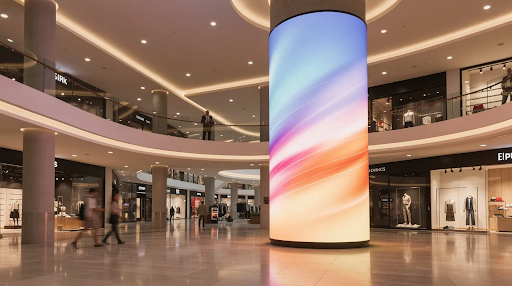
Choosing the right LED display depends heavily on where the screen will be installed. Although indoor and outdoor LED displays use similar fundamental technology, they are designed to handle very different environmental conditions, viewing distances, and brightness requirements.
Understanding the differences between an indoor LED screen and an outdoor LED screen can help businesses, event organisers, retailers, and system integrators select a display that delivers reliable performance without unnecessary costs.
From brightness and pixel pitch to IP ratings and thermal management, this guide explains the key differences between indoor and outdoor LED screens.
What Is the Difference Between Indoor and Outdoor LED Screens?
The main difference is the environment in which each display is designed to operate.
Indoor LED screens are designed for controlled environments where there is little or no exposure to rain, direct sunlight, and extreme temperature changes. Outdoor LED screens, on the other hand, must withstand sunlight, moisture, dust, wind, and changing weather conditions.
Because of these differences, outdoor models generally require more robust cabinets, higher brightness, stronger weather protection, and enhanced heat management.
Indoor LED Screen Characteristics
An indoor LED screen is typically designed for environments such as:
- Corporate offices
- Shopping malls
- Retail stores
- Conference rooms
- Hotels
- Exhibition halls
- Churches and auditoriums
- Control rooms
- Showrooms
Since indoor displays are usually viewed from shorter distances, fine pixel pitches are commonly used to produce detailed images.
Outdoor LED Screen Characteristics
An outdoor LED screen is designed for locations exposed to environmental conditions such as sunlight, rain, humidity, and dust.
Common applications include:
- Outdoor advertising
- Building façades
- Stadiums
- Concerts and festivals
- Roadside advertising
- Shopping centre exteriors
- Public spaces
- Outdoor events
These displays typically use higher brightness and larger pixel pitches because viewers are often positioned further away.
Brightness Requirements: Indoor vs. Outdoor
Brightness is one of the most significant differences between indoor and outdoor LED displays.
Indoor LED Brightness
Indoor LED screens commonly operate within approximately 600 to 1,500 nits, depending on the environment and application.
For example, a conference room with controlled lighting may not require the same brightness as a brightly illuminated shopping mall.
Excessive brightness indoors can also make content uncomfortable to view, particularly when audiences are sitting close to the display.
Outdoor LED Brightness
Outdoor LED screens generally require substantially higher brightness, often around 5,000 to 8,000+ nits, to maintain visibility under strong daylight.
Direct sunlight can significantly reduce the perceived contrast of a display. Higher brightness helps compensate for this effect and allows advertisements, videos, text, and graphics to remain visible throughout the day.
However, brightness should be selected according to the actual installation environment rather than simply choosing the highest available specification.
Pixel Pitch and Resolution
Pixel pitch is another major difference between indoor and outdoor LED displays.
Pixel pitch refers to the distance between the centres of adjacent LED pixels. A smaller pixel pitch generally provides greater pixel density and is better suited to closer viewing distances.
Indoor Pixel Pitch
Indoor displays commonly use fine pixel pitches such as P1.2, P1.5, P1.8, P2.0, and P2.5.
These specifications are particularly useful when viewers are close to the screen and require detailed imagery.
For example, a corporate presentation or retail display viewed from several metres away may benefit from a fine-pitch LED display because text, graphics, and high-resolution video need to remain sharp.
Outdoor Pixel Pitch
Outdoor displays often use larger pixel pitches such as P3.9, P4.8, P6, P8, or P10.
Because outdoor displays are typically viewed from greater distances, extremely small pixel pitches may not provide enough practical benefit to justify their additional cost.
The appropriate pixel pitch should therefore be selected based on the expected viewing distance rather than screen size alone.
IP Ratings and Weather Protection
Ingress Protection, commonly known as an IP rating, indicates how effectively an enclosure protects against the entry of solids and liquids.
This is particularly important when comparing indoor and outdoor LED screens.
Indoor IP Ratings
Indoor LED displays may use ratings such as IP30 or IP40, depending on their construction and intended application.
These levels can provide protection against solid objects and dust to varying degrees, but they are generally not designed to withstand direct exposure to rain or water.
Therefore, an indoor display should not normally be installed in an exposed outdoor location simply because it physically fits the space.
Outdoor IP Ratings
Outdoor LED displays commonly require much stronger environmental protection, with specifications such as IP65 or higher depending on the design.
IP65-rated equipment provides protection against dust ingress and water jets, making it substantially more suitable for outdoor environments.
Some specialised systems may use even higher protection levels for particular applications.
When evaluating an outdoor LED display, buyers should check whether the stated IP rating applies to the complete cabinet, the front and rear surfaces, or individual components.
Thermals and Enclosure Design
Temperature management is another critical consideration for outdoor LED installations.
Waterproof Cabinets
Outdoor LED displays generally use specially designed cabinets to protect internal electronics from rain and moisture.
The cabinet design needs to balance waterproofing with proper heat dissipation. Simply sealing a cabinet without considering heat management can create thermal problems during prolonged operation.
Heat Dissipation
Outdoor screens can generate significant heat because they operate at higher brightness levels and are exposed to direct sunlight.
Manufacturers may use different approaches to manage heat, including ventilation systems, heat sinks, cabinet airflow, and fanless thermal designs.
Fanless designs can be beneficial in certain environments because they reduce moving components and can limit dust being drawn into the cabinet.
UV-Resistant Components
Outdoor LED displays may also incorporate UV-resistant materials and modules designed to withstand prolonged exposure to sunlight.
UV resistance can help reduce material degradation and maintain the appearance and performance of the display over time.
Can You Use an Outdoor LED Screen Indoors?
Technically, an outdoor LED display can be installed indoors in certain circumstances, but it is not always the most practical solution.
Outdoor displays are designed around demanding environmental conditions and may have brightness levels that are excessive for an indoor viewing environment. Their larger pixel pitch may also be unnecessary for audiences sitting close to the screen.
An outdoor display may therefore consume more energy and cost more than an appropriately specified indoor model.
Can You Use an Indoor LED Screen Outdoors?
An indoor LED display should generally not be used in an exposed outdoor environment.
Indoor models are not normally designed to withstand rain, humidity, direct sunlight, temperature fluctuations, or outdoor dust. Their lower brightness may also make content difficult to see in daylight.
For permanent outdoor installations, businesses should select a display specifically engineered for outdoor conditions.
How to Choose the Right LED Screen
Before purchasing an LED display, consider the following factors:
1. Identify the Installation Environment
Determine whether the screen will be installed indoors, outdoors, or in a semi-outdoor location.
2. Calculate the Viewing Distance
Estimate the closest and furthest typical viewing positions. This will help determine an appropriate pixel pitch.
3. Evaluate Ambient Light
Consider whether the display will be exposed to direct sunlight, artificial lighting, or controlled indoor lighting.
4. Check Environmental Protection
For outdoor installations, review IP ratings, waterproofing, UV resistance, operating temperature, and thermal management.
5. Consider Long-Term Maintenance
Check module accessibility, spare parts, warranty coverage, power requirements, and technical support before making a purchase.
Indoor vs. Outdoor LED Screen: Which One Do You Need?
Indoor and outdoor LED displays are designed for different operating environments, so the correct choice depends primarily on installation conditions, viewing distance, brightness requirements, and environmental exposure.
Indoor displays typically prioritise fine pixel pitch and comfortable viewing in controlled environments, while outdoor displays focus on high brightness, weather resistance, robust construction, and thermal management.
Understanding these differences allows businesses to select an LED display based on actual project requirements rather than simply choosing the display with the highest specifications. A properly matched system can provide better image quality, operational reliability, and long-term value.
