
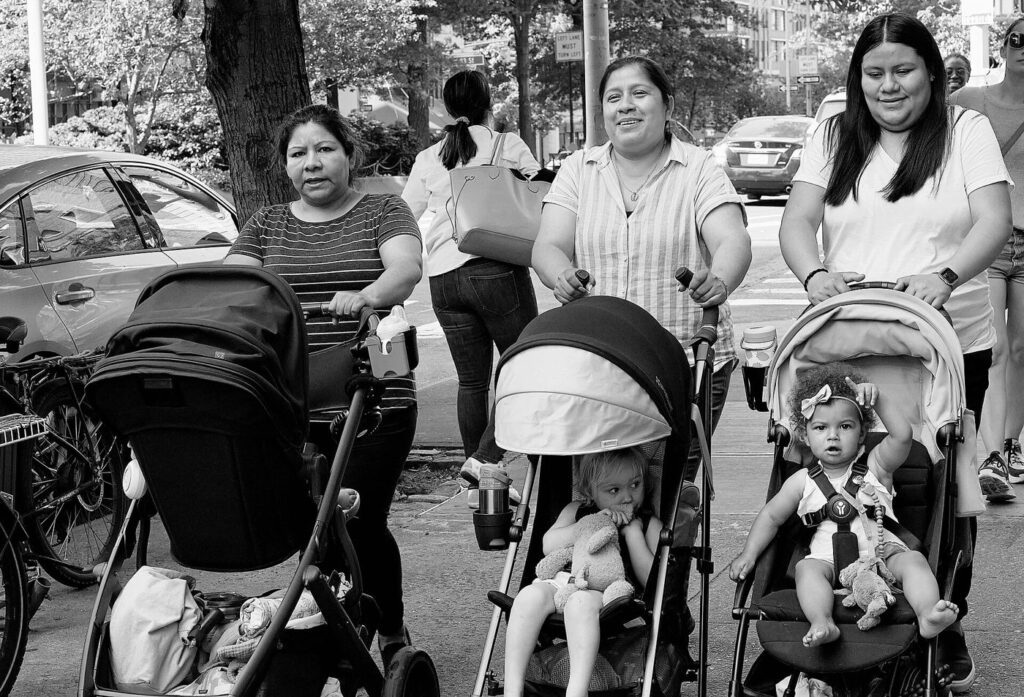
Social proof is the tendency to look at what other people are doing and treat it as evidence of what we should do ourselves, and it shapes far more of daily life than most of us realise. Psychologists describe it as a mental shortcut: when we are unsure how to act, the behaviour of the crowd feels like useful information. A restaurant full of diners seems safer than an empty one, a product with thousands of positive reviews feels more trustworthy, and a queue outside a shop suggests something inside is worth having. The effect is strongest in unfamiliar situations, where we have no experience of our own to rely on. Marketers, fundraisers and politicians all use social proof deliberately, because they know that showing us what others have chosen is often more persuasive than any argument. The effect can be seen in queues outside new restaurants, in the rapid spread of fashion trends and in the way fundraising campaigns display the names of recent donors, all of which signal to newcomers that joining in is safe, normal and expected.
What the Evidence Shows
The power of social proof comes from a very human instinct to belong and to avoid standing out for the wrong reasons. In experiments, people have followed strangers into the wrong lift, laughed at jokes they did not find funny and agreed with opinions they privately rejected, all because the group seemed to expect it. The same instinct can be a force for good: when hotels tell guests that most visitors reuse their towels, towel reuse rises, and when tax authorities mention that most people pay on time, payments improve. The risk is that social proof can also spread bad behaviour, from panic buying to dangerous crowd movements. The safeguard is to pause and ask whether the crowd is acting on good information or merely copying each other. Businesses have learned to manufacture social proof with testimonials, ratings and follower counts, which is why it pays to check whether the crowd is real, because a thousand reviews can be bought more cheaply than a good product can be built, and the two are not the same thing. Reporting and analysis from sources such as Nature Human Behaviour track the same developments, and specialists following social proof shapes our decisions say the direction is now consistent across independent lines of evidence.
The Wider Context
The wider context is a discipline rebuilding confidence through replication and pre-registration, and findings on social proof shapes our decisions are being reported with their effect sizes and limits attached. That honesty can make results sound smaller than the headlines of a decade ago, but the effects that survive are the ones practitioners can responsibly build on.
What Happens Next
What happens next in research on social proof shapes our decisions is a turn toward real-world trials: longer, larger and conducted in the schools, workplaces and clinics where the findings are meant to apply. Psychologists are also studying individual differences more seriously, because average effects conceal the people for whom an approach works powerfully and those it leaves cold. Both shifts make the science slower and more useful. You can follow related developments in our coverage of psychology.
None of this will be settled by a single announcement, study or product launch. The pattern to watch is accumulation: independent confirmations, honest reporting of failures and steady improvement in the underlying numbers. Readers who follow those signals, rather than the loudest claim of the week, will understand this subject better than most of the commentary surrounding it suggests is possible.
