
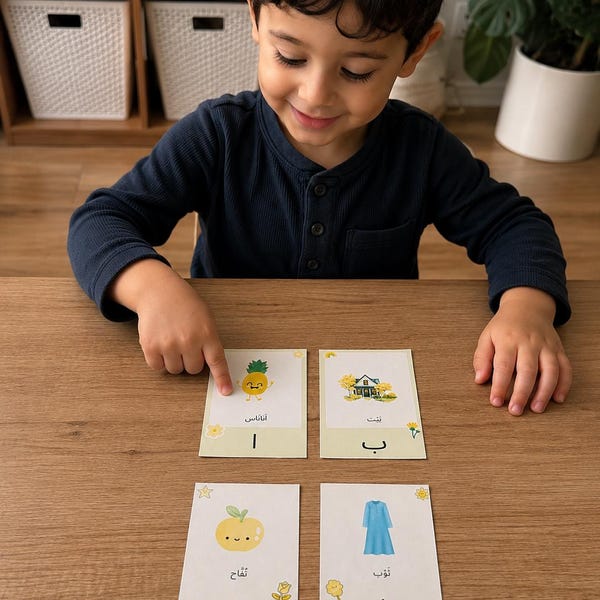
Children notice the world through their hands before they notice it through textbooks. A cup, a key, and a door are already full of meaning to them. Parents looking for simple ways to learn Arabic for kids at home can turn those same objects into daily lessons at almost no cost. This guide from Al Azhar Classes shows how to build vocabulary through everyday objects, with clear steps, simple games, and realistic expectations for families at any starting point.
Why Everyday Objects Work So Well
Children learn words faster when a word is attached to something they can see, touch, and use. Educators often call this multisensory learning, and it builds on dual coding theory, which suggests that pairing a word with an image or object strengthens memory. A real cup also gives a child a reason to speak, since asking for it has a purpose.
Arabic offers extra advantages. It is one of the six official languages of the United Nations, and it is spoken by hundreds of millions of people worldwide. Many household words are short and easy to pronounce, such as باب (bab, door) and كتاب (kitab, book). Learning them early builds confidence before grammar begins. Parents curious about the bigger picture can read why early Arabic matters for children.
Did you know? Arabic is written from right to left, so labels are read from the right, which is often a fun surprise for children.
Step 1: Choose a Small Starter List
Start with ten objects your child touches every day. Too many words at once cause overload, so keep the list short and personal.
- باب (bab): door
- كتاب (kitab): book
- قلم (qalam): pen
- كرسي (kursi): chair
- مفتاح (miftah): key
- ساعة (sa'a): clock
- سرير (sarir): bed
- كوب (kub): cup
Pick objects from one room first, such as the kitchen, so that words connect naturally.
Step 2: Label the Room
Write each word in Arabic and transliteration on a card and tape it to the object. Daily exposure is powerful, because children absorb words they see repeatedly. Say the word aloud whenever you use the object, and ask your child to repeat it. If your child is still unfamiliar with letters, begin with the Arabic alphabet for kids so the labels start to make sense.
Expert insight: Place labels at your child's eye level, so the word sits next to the object whenever your child looks at it.
Step 3: Introduce the Article and Gender Gently
Arabic nouns are masculine or feminine, and many feminine nouns end in ta marbuta, as in ساعة (sa'a). The definite article ال (al) attaches to the front of a noun, so كتاب becomes الكتاب (al-kitab, the book). Do not explain these rules in detail at first. Simply model full phrases, such as "hadha kitab" for "this is a book," and let patterns emerge naturally. Formal grammar can wait until your child reads comfortably.
Arabic Learning Activities for Ten Minutes a Day
Short, playful sessions beat long drills for young children. Try these Arabic learning activities:
- Show and say: Hold up an object, say its name, and let your child repeat it three times.
- Touch and point: Call out a word and ask your child to touch the matching object.
- Bring me: Ask for an object in Arabic, such as "ahdir al-kitab," and celebrate when it arrives.
- Mystery bag: Place an object in a bag and let your child feel it, then guess the Arabic word.
- Sort and name: Group objects by room or by color and name each group aloud.
Arabic Vocabulary Games Children Enjoy
Games turn repetition into fun, and fun keeps children coming back. Total Physical Response, developed by psychologist James Asher, links language to movement, and it works well here. Arabic vocabulary games can include:
- Simon says in Arabic: Give commands such as touch the door or pick up the pen.
- Memory match: Pair picture cards with real objects or word cards.
- Treasure hunt: Hide labeled objects and ask your child to find them by their Arabic names.
- Shop pretend: Set up a small store with household items and practice asking for them.
Build a Weekly Routine With Spaced Review
Memory fades without review. Spaced practice, where you revisit words after increasing gaps, has strong support in learning research. A simple weekly rhythm works well:
- Monday: Introduce three new objects.
- Wednesday: Review Monday's words with a game.
- Friday: Review all words and add two new ones.
- Weekend: Play a treasure hunt using the whole week's list.
Grow From Words to Short Sentences
After a few weeks, move from single nouns to short phrases. Objects make this natural because children can see the relationship you describe.
- Add colors: kitab ahmar, a red book.
- Add size: qalam tawil, a long pen.
- Add place: al-kitab ala al-tawila, the book is on the table.
- Add questions: ma hadha? What is this?
Common Challenges and Simple Fixes
Every family faces obstacles. Naming them early helps you respond calmly.
- Inconsistency: Attach lessons to routines, such as breakfast or bedtime.
- Parent confidence: You do not need fluency to begin. Learn alongside your child.
- Pronunciation worries: Arabic has sounds that English lacks, such as ع and ح, so listen to a teacher or trusted audio.
- Dialect confusion: Spoken Arabic differs by region, so decide whether you are teaching Modern Standard Arabic or a dialect.
- Fading interest: Rotate games and keep sessions under fifteen minutes.
Trends in Arabic Learning for Children
Families increasingly mix home play with live online lessons, which makes qualified teachers available in any time zone. Short, game-based sessions are popular, and picture cards and apps now support review between lessons. These tools help, yet they work best alongside real objects and live conversation.
When to Add a Teacher
Home activities build a base, but a teacher adds correction and structure. A one-to-one Arabic course lets a tutor adapt vocabulary to your child's age and pace. Parents who also want Quran reading can explore online Quran classes for kids, while those interested in broader learning can look at Islamic studies for kids. Families curious about how Arabic connects to the Quran can read about Quranic Arabic for kids. For general guidance, this article on the best way to learn Arabic sets expectations for pace and practice.
Quick Tips for Parents
- Keep sessions short, ideally ten minutes.
- Praise effort before accuracy.
- Use real objects before flashcards.
- Repeat each word in a full phrase.
- Record your child's voice and replay it for fun.
- Review old words before adding new ones.
- Choose one dialect or Modern Standard Arabic and stay consistent.
- Let your child teach you a word at the end of each session.
- Keep a small basket of labeled objects for travel or waiting rooms.
How to Track Progress
Progress should be simple to see. Keep a chart of words your child can name without help, and update it each week. Celebrate small milestones, such as naming ten objects, because confidence drives motivation. Share the chart with a teacher so lessons can target weak spots.
Frequently Asked Questions (FAQs)
1. What is the best age to learn Arabic for kids?
There is no fixed age. Many families start around age four or five with objects, songs, and short games, because young children respond well to hands-on learning. Older children can begin at any time with a plan that matches their reading level. Programs with easy lessons for kids of all ages make it simple to find a suitable starting point.
2. How many Arabic words should my child learn each week?
Five to ten new words per week is a sensible guideline for most young learners, with a short review of older words each day. Quality matters more than quantity, so adjust the pace if your child feels overloaded. For a fuller view of pacing and practice, read the best way to learn Arabic online.
3. Which Arabic vocabulary games work best for young children?
Simple movement games work well, such as Simon says, treasure hunts with labeled objects, and memory match with picture cards. These Arabic vocabulary games link each word to an action, which helps memory. A live teacher can add structured play to your home routine, and you can meet the qualified instructors before booking.
4. Should I teach Modern Standard Arabic or a dialect first?
It depends on your goal. Modern Standard Arabic is the language of books, media, and the Quran, so it suits children who will read and study formally. Spoken dialects help with daily conversation in a specific region. If your goal includes Quran reading, explore Quranic Arabic languages online before you choose.
5. Are online lessons effective for children learning Arabic?
They can be, when sessions are short, interactive, and led by a patient teacher. Live lessons give instant correction and keep children engaged, and they pair well with home Arabic learning activities using everyday objects. You can read about the benefits of online classes for kids to see what parents commonly gain.
6. Do parents need to speak Arabic to help their child?
No. You can learn alongside your child, repeat words from a trusted teacher or audio, and focus on routine practice. A tutor handles pronunciation and correction, while you provide encouragement and review. This guide on how to get the most out of an online tutor explains how parents can support each lesson.
7. Can my child try a lesson before committing?
Al Azhar Classes states that after you submit the registration form, its team contacts you to arrange your first lesson. This gives you a chance to meet the teacher and see how your child responds. For common questions about booking and lessons, visit the frequently asked questions page.
Conclusion
Teaching Arabic through everyday objects is affordable, flexible, and rooted in how children naturally learn. Start with ten words, label your space, play short games, and review a little every day. Over time, those small habits grow into confident vocabulary. Al Azhar Classes offers one-to-one online lessons, qualified teachers, and flexible scheduling to support families at every stage. When you are ready for guided support, register your child and begin the journey together.
