
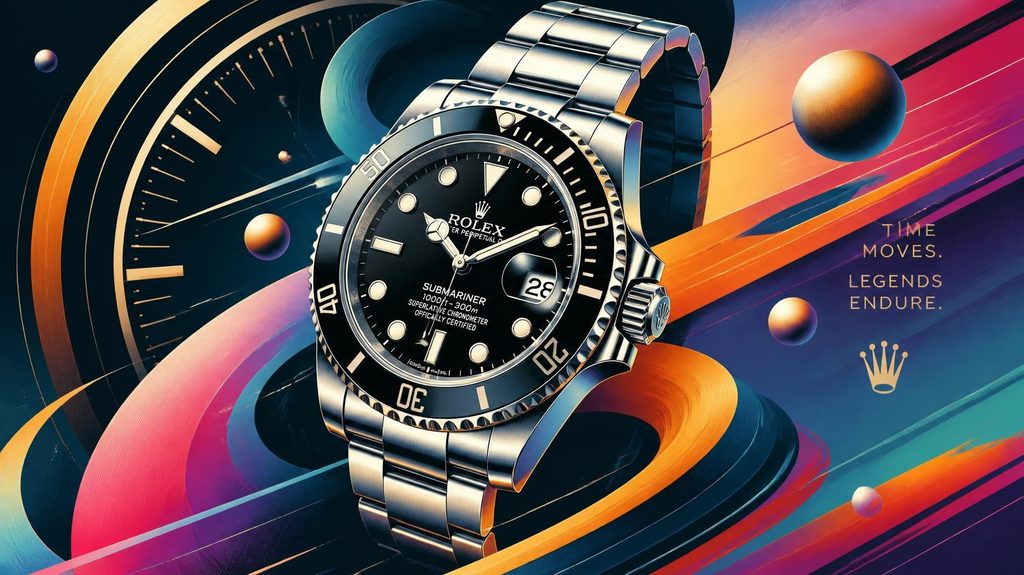
In an age of smartphones and connected devices, traditional mechanical watches continue to hold a special place in the world of personal accessories. Their appeal comes from qualities that digital technology cannot easily reproduce: craftsmanship, mechanical complexity, heritage, tactile interaction, and timeless design.
Among the most recognizable names in luxury watchmaking, Rolex has built a distinctive reputation around these principles. Its watches are known for recognizable aesthetics, robust construction, mechanical movements, and a history closely connected with innovation and professional use.
For newcomers and experienced enthusiasts alike, exploring the details behind this reputation offers a better understanding of why fine mechanical watches continue to attract attention.
A Legacy Built on Innovation
The development of the wristwatch involved more than simply creating a smaller version of a pocket watch. A wrist-worn timepiece needed to cope with constant movement and exposure to the environment.
Dust and moisture could damage delicate mechanical components, while physical impacts could affect movement performance. Creating a practical wristwatch therefore required improvements in case construction, sealing, and movement reliability.
Rolex became associated with these developments through innovations designed to make wristwatches more resistant to everyday conditions. The Oyster case was an important example of this engineering approach.
The concept helped demonstrate that a wristwatch could combine sophisticated appearance with practical durability. This balance between form and function would remain central to the company’s identity.
Understanding Mechanical Movements
A mechanical movement is a miniature machine containing numerous components that work together to measure time.
Energy is stored in a mainspring and gradually released through a gear train. The escapement regulates that energy, while the balance assembly controls the movement’s rhythm.
Although the basic principle is centuries old, manufacturing these components at extremely small dimensions requires considerable precision.
Each part needs to interact correctly with the others. The slightest manufacturing or assembly issue can influence the movement’s performance.
This is what makes mechanical watches particularly fascinating. Their function is relatively simple, but the engineering required to perform it reliably on such a small scale is remarkably sophisticated.
The Pursuit of Accuracy
Accuracy has always been one of the central challenges of mechanical watchmaking.
A movement can be influenced by temperature, position, magnetism, and physical shocks. Modern watchmakers have responded with improved materials, manufacturing techniques, movement designs, and testing procedures.
Precision manufacturing allows components to be produced with increasingly consistent dimensions. Careful assembly and regulation then help bring the completed movement within its intended performance range.
This process combines traditional watchmaking knowledge with modern engineering.
The result is a timepiece that demonstrates how mechanical systems can be refined without abandoning the principles that define traditional watchmaking.
Design That Stands the Test of Time
One of the most notable characteristics of Rolex is the consistency of its visual identity.
Rather than constantly replacing established designs, the company has generally evolved them through gradual refinements. Changes can involve movement technology, materials, dimensions, finishing, and individual details while retaining recognizable characteristics.
This creates a connection between watches from different eras.
A vintage example can still share a visual relationship with a modern watch, allowing collectors to see how a design has developed over time.
Timeless design also offers practical advantages. A classic aesthetic is less dependent on temporary fashion trends and can remain suitable for different occasions over many years.
Professional Origins
Some of the most recognizable mechanical watches were influenced by professional requirements.
Divers needed watches capable of functioning reliably underwater. Pilots required clear and dependable timekeeping. Explorers needed durable instruments that could perform in challenging environments.
These demands influenced the design of cases, bezels, dials, and movements.
Although modern owners may never use their watches in extreme professional conditions, the original purpose remains part of their appeal. The design tells a story about engineering problems that needed to be solved.
This relationship between practical function and visual identity is particularly important in the history of sports and tool watches.
Materials and Manufacturing Quality
Materials have a significant impact on a watch’s performance and appearance.
Stainless steel is valued for durability and corrosion resistance. Precious metals offer distinctive weight and visual character. Sapphire crystal provides strong resistance to scratches and helps protect the dial.
Ceramic may also be used for specific components where hardness and wear resistance are important.
Yet material selection is only one part of the equation.
Manufacturing precision, surface finishing, quality control, and assembly determine how successfully those materials are incorporated into the final product.
A high-quality watch therefore represents the combination of material science, engineering, manufacturing expertise, and careful craftsmanship.
Exploring the Secondary Market
The pre-owned watch market offers collectors access to discontinued models, older references, and pieces with individual histories.
Vintage examples can be particularly interesting because they reflect the design priorities and manufacturing techniques of earlier periods.
However, buyers should evaluate the condition of each individual watch carefully.
Factors such as previous polishing, scratches, bracelet wear, replacement components, movement condition, and servicing can influence an example’s overall desirability.
Documentation may provide useful information about the watch’s history. Service records, original paperwork, and details about previous ownership can all contribute to a clearer picture.
Those interested in researching luxury watches can explore rolex for additional information.
The Importance of Authenticity
Authentication is an important consideration whenever a valuable luxury watch is purchased.
Counterfeit products can sometimes reproduce exterior details convincingly, making it difficult to establish authenticity through photographs alone.
A thorough assessment may involve examining the movement, dial, case construction, finishing, reference information, and individual components.
Professional inspection can be particularly useful for expensive purchases.
The seller should also be considered carefully. Transparent descriptions, clear documentation, and a willingness to answer reasonable questions are positive signs.
An unusually low price should be investigated rather than automatically considered an exceptional opportunity.
Maintaining a Mechanical Timepiece
Proper maintenance is essential for long-term ownership.
Mechanical movements contain many moving parts that experience gradual wear. Lubricants can deteriorate, seals can age, and components may eventually require adjustment or replacement.
Professional servicing allows the movement to be inspected and maintained by someone with appropriate technical expertise.
Water resistance should also be monitored. Seals can lose effectiveness as they age, so owners who regularly expose their watches to water should follow appropriate testing and maintenance recommendations.
Simple habits can also help. Avoiding unnecessary impacts, storing the watch appropriately, and following manufacturer care instructions can preserve both appearance and performance.
The Emotional Connection
The appeal of a mechanical watch is not always measurable through specifications.
A watch can represent a personal achievement or important life event. It may be purchased to celebrate a graduation, career milestone, anniversary, or another memorable occasion.
Over time, the watch can become associated with the experiences that followed.
Its ability to remain serviceable for decades also creates the possibility of inheritance. A well-maintained timepiece can pass from one generation to another, carrying both physical history and sentimental value.
Even signs of everyday use can become meaningful. A scratch acquired during an important journey may eventually become part of the object’s story.
Becoming a Knowledgeable Enthusiast
Anyone entering the world of luxury watches can benefit from learning the basics before making significant purchases.
Understanding movements, references, complications, materials, case construction, bracelets, and servicing makes it easier to compare different models.
Research also helps enthusiasts discover their own preferences.
Some people prefer vintage pieces, while others favor modern engineering. Some appreciate understated designs, whereas others are attracted to robust professional watches or complicated movements.
There is no single correct approach to collecting.
A meaningful collection should ultimately reflect the owner’s interests rather than simply following short-term market trends.
Choosing a Watch for Everyday Life
The right watch depends partly on how it will be used.
Someone looking for an everyday timepiece may prioritize comfort, durability, and versatility. A collector may instead place greater emphasis on historical importance, rarity, or technical characteristics.
Case size is another practical consideration. Diameter, thickness, weight, and bracelet design can influence comfort considerably.
For a pre-owned watch, condition and service history deserve particular attention.
It is also wise to consider long-term ownership costs. Mechanical watches require maintenance, and responsible ownership means planning for future servicing rather than treating it as an unexpected inconvenience.
Why Mechanical Watches Still Matter
The continued popularity of mechanical watches is particularly interesting because digital devices can perform the same basic function with greater accuracy and additional features.
But mechanical watches offer something different.
They provide a tangible expression of craftsmanship. Their movements can be studied, their construction appreciated, and their designs passed through generations.
Rolex is a particularly recognizable example of this broader tradition. Its combination of engineering, design continuity, professional associations, and long-term brand heritage has helped maintain interest in mechanical watchmaking.
For readers who want to explore more information about luxury watches, replica rolex provides another resource.
Traditional Watchmaking in a Digital World
The rise of smartwatches has changed expectations around wearable technology. Modern devices can display notifications, monitor activity, provide navigation, and perform numerous other functions.
Mechanical watches are not designed to compete with that functionality.
Instead, they occupy a different category.
Their appeal is based on physical craftsmanship, long-term durability, design, and heritage. In a world where many products are replaced as technology changes, a mechanical watch can remain fundamentally recognizable for decades.
That difference may help explain why traditional watchmaking continues to attract a new generation of enthusiasts.
Conclusion
Fine watchmaking combines engineering, craftsmanship, design, and history in an unusually compact form. The result can be both a functional instrument and a lasting personal possession.
Rolex’s reputation has been shaped by its focus on reliability, recognizable design, professional heritage, and mechanical innovation. These qualities have helped it remain a prominent name in the luxury-watch world across generations.
For prospective buyers, informed research is essential. Understanding authenticity, condition, movement technology, materials, servicing, and personal requirements can make the purchasing process more rewarding.
Ultimately, the appeal of a mechanical watch is about more than measuring hours and minutes. It is about appreciating an object created through precision, craftsmanship, and generations of accumulated knowledge—and one that can potentially remain meaningful long after its original owner has stopped wearing it.
