
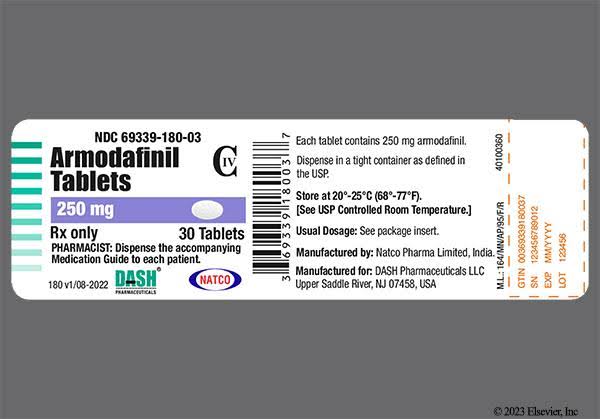
Armodafinil has a reputation as one of the better-tolerated wakefulness medications, and that reputation is largely deserved. Most people take it without serious problems. But “well tolerated” is a population-level statement, and if you are the person with the pounding headache at 3 p.m. or the one staring at the ceiling at 1 a.m., the statistics are cold comfort. This guide goes through the side effects of armodafinil one by one, explains why each happens, and, most usefully, describes what you can actually do about it.
Armodafinil (Nuvigil) is the R-enantiomer of modafinil and is approved for excessive sleepiness in narcolepsy, obstructive sleep apnea, and shift work disorder. It works primarily by inhibiting the dopamine transporter, with downstream effects on orexin and histamine systems. Because its mechanism differs from classic stimulants, its side-effect profile is milder, but it is not zero. People who research armodafinil before trying it are usually right to want the full picture.
How Common Are Side Effects, Really?
In clinical trials, the most frequently reported adverse effects at 150–250 mg were headache, nausea, dizziness, and insomnia. Headache was by far the most common, reported by roughly one in six participants, compared with about one in eleven on placebo. Nausea, dizziness, and insomnia each occurred in a small single-digit percentage. Discontinuation because of side effects was uncommon.
Two things are worth noting. First, the placebo group reported many of the same symptoms, which tells you that some of what people attribute to the drug is background noise. Second, most side effects cluster in the first one to two weeks and then fade as the body adjusts. If you can manage the early period, the long-term experience is usually smooth.
Headache
Why it happens. The precise mechanism is not fully established, but several contributing factors are well recognized. Armodafinil mildly constricts blood vessels, it can reduce thirst and appetite so people drink less, and it prolongs periods of intense concentration during which people forget to take breaks, hydrate, or eat. Tension-type headache from prolonged screen focus adds to the mix.
How to minimize it.
- Drink water deliberately. A practical target is a glass every hour during the first six hours after dosing.
- Eat something within two hours of dosing, even if you are not hungry.
- Reduce, do not eliminate, caffeine. Cutting coffee entirely can cause a caffeine-withdrawal headache that gets blamed on armodafinil.
- Take a short break from screens every hour.
- If headaches persist beyond two weeks, try dropping from 150 mg to 100 mg or 75 mg for a few days.
Most armodafinil headaches respond to ordinary over-the-counter analgesics. A headache that is severe, sudden, or accompanied by vision changes or stiff neck is not a typical drug side effect and needs medical attention.
Insomnia and Sleep Disruption
Why it happens. Armodafinil has a half-life of about 15 hours. A dose at 9 a.m. is still meaningfully present at midnight. If the dose is taken later, or if you are particularly sensitive, enough drug remains at bedtime to delay sleep onset or lighten sleep.
How to minimize it.
- Dose within an hour of waking, and never after 10 a.m. for a normal schedule.
- Cut all caffeine after noon.
- Keep a fixed wake time, even on days off.
- Dim lights and reduce screen use in the last hour before bed.
- If sleep is still disrupted, reduce the dose before reaching for a sleep aid.
The insomnia-sleepiness loop
One trap deserves a name. Poor sleep makes you sleepier the next day, which makes the drug feel less effective, which tempts you to take more or take it later, which worsens sleep further. The fix is always at the front of the loop: earlier and lower, not later and higher.
Nausea and Digestive Effects
Why it happens. Armodafinil can slow gastric emptying slightly and reduce appetite. Taking it on an empty stomach concentrates the effect.
How to minimize it.
- Take it with a light breakfast. Food delays absorption slightly but does not reduce the total effect.
- Avoid very fatty or very large meals right after dosing, which can compound the queasy feeling.
- Ginger tea or plain crackers help some people through the first week.
- Nausea that persists past two weeks is unusual and worth mentioning to a doctor.
Dry mouth is also common and is best managed with water and sugar-free gum rather than sugary drinks.
Anxiety, Jitteriness, and Irritability
Why it happens. Increased dopamine and norepinephrine signaling can heighten arousal beyond simple alertness, especially in people with an existing tendency toward anxiety. Caffeine amplifies this considerably.
How to minimize it.
- Halve your usual caffeine intake on armodafinil days.
- Start at 50 mg or 75 mg rather than 150 mg if you have any history of anxiety.
- Build in physical movement. A brisk walk mid-morning discharges some of the restlessness.
- Avoid stacking with other stimulants, including some pre-workout supplements and decongestants.
If you experience panic attacks, severe agitation, or mood changes that feel out of character, stop and consult a physician. Rarely, armodafinil can trigger or worsen psychiatric symptoms in people with a history of psychosis, mania, or severe depression, and it should be used with caution in those groups.
Cardiovascular Effects
Why it happens. Armodafinil produces small increases in heart rate and blood pressure in some users. These are usually modest, but they matter in people with existing hypertension or heart disease.
How to minimize it.
- Check blood pressure before starting and again after two weeks.
- Do not combine with high-dose caffeine or other sympathomimetics.
- Report palpitations, chest pain, or shortness of breath immediately.
People with a history of left ventricular hypertrophy, mitral valve prolapse with stimulant-related symptoms, or recent heart attack should discuss the risks carefully before use.
Skin Reactions: Rare but Serious
Why it matters. Modafinil and armodafinil carry warnings for rare, serious skin reactions including Stevens-Johnson syndrome and drug reaction with eosinophilia and systemic symptoms (DRESS). These are uncommon, but they can be life-threatening.
What to watch for.
- Any rash, especially one that spreads or blisters
- Rash accompanied by fever, swollen lymph nodes, mouth sores, or facial swelling
- Onset typically in the first one to five weeks of use
The correct response to any of these is to stop the drug and seek medical care the same day. Do not wait to see if it improves. Because of this risk, armodafinil is not recommended for children, in whom serious rashes have been reported at a higher rate.
Dizziness and Lightheadedness
Why it happens. Usually a combination of dehydration, skipped meals, and sometimes mild blood pressure changes on standing.
How to minimize it. Hydrate, eat, and stand up slowly. If dizziness is persistent or accompanied by fainting, that is not typical and warrants evaluation.
A Quick Reference Table
| Side effect | Frequency | Main causes | First fix to try |
| Headache | Common | Dehydration, skipped meals, caffeine changes | Water, food, moderate caffeine |
| Insomnia | Fairly common | Late dosing, long half-life | Dose before 10 a.m. |
| Nausea | Occasional | Empty stomach | Take with light food |
| Anxiety | Occasional | Stimulant stacking, predisposition | Cut caffeine, lower dose |
| BP/HR increase | Occasional | Sympathetic activation | Monitor, avoid stacking |
| Serious rash | Rare | Immune reaction | Stop immediately, seek care |
Long-Term Considerations
Armodafinil does not appear to cause the tolerance escalation seen with amphetamines, and physical dependence is uncommon. Some people do report that the effect softens over months of daily use; scheduled breaks, such as weekends off, can help preserve sensitivity. Armodafinil is a Schedule IV controlled substance in the United States, and it is a prescription medication in most countries. It is not a replacement for sleep, and anyone with cardiovascular, liver, or psychiatric conditions should talk with a doctor before using it. This applies to any cognitive enhancer, not just this one.
A subtler long-term issue is the one no side-effect table captures: using a wakefulness drug to chronically override a sleep deficit. Armodafinil makes sleep deprivation feel more tolerable without reducing its biological cost. The healthiest long-term users treat the medication as a way to function despite a diagnosed condition, not as a way to sleep less.
FAQ
Do side effects mean the dose is too high? Sometimes. Headache and anxiety often improve at a lower dose. Insomnia usually improves with earlier timing rather than a lower dose. If side effects are mild and fading week by week, the dose is probably fine.
Can I take ibuprofen or acetaminophen for the headache? Yes, both are compatible with armodafinil. Address hydration and food first, since those fix the cause rather than the symptom.
I feel fine during the day but sleep is lighter. Is that a side effect? Yes, and a common one. Lighter or shorter sleep is the residual drug tail. Move your dose earlier and cut afternoon caffeine. If it persists, reduce the dose.
Is it normal to lose interest in food? Mild appetite suppression is expected. Set meal reminders so you eat on schedule. Significant unintended weight loss is a reason to reassess.
Will the side effects come back if I stop for a week and restart? Possibly, in milder form. The first few days after a break can bring back a touch of headache or jitteriness, but it usually resolves faster than the initial adjustment did.
Final Thoughts
Armodafinil’s side effects are mostly predictable, mostly mild, and mostly manageable with a handful of habits: dose early, drink water, eat, moderate caffeine, and protect your sleep. Headache and sleep disruption are the two you are most likely to meet, and both respond to simple adjustments. The rare serious reactions, particularly skin rashes, are worth knowing about so that you act quickly if they appear. Approach the first two weeks with a little patience and a lot of water, and the odds are good that the medication will settle into a quiet, reliable part of your day.
For more topic guides and related resources, visit Modavance.
