
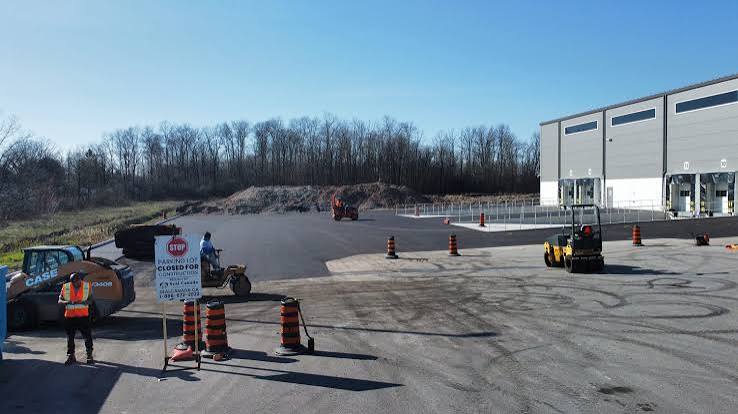
Why These Three Goals Pull Against Each Other
Every paving project runs on three variables: how good the finished surface needs to be, how fast it needs to go up, and how much the client wants to spend. Push on one, and the other two move. A contractor who promises the fastest turnaround on a tight budget is usually cutting into material thickness or compaction time. A contractor who insists on the longest-lasting method may need more days and more dollars than the client expected.
Good contractors do not pretend this tension does not exist. They name it early, before the crew shows up, so nobody is surprised later.
Setting Priorities Before Any Asphalt Goes Down
A paving job goes smoother when the client and contractor agree, in writing, on what matters most for this particular surface. A homeowner repaving a driveway they plan to sell the house behind in two years has different priorities than a property owner planning to hold the lot for twenty.
That conversation should cover:
- How long the surface needs to last
- How much traffic or weight it will carry
- Whether the budget allows for base repair, or only a surface layer
- How much disruption the property can tolerate during the work
Skipping this step is one of the more common reasons projects go over budget. The client assumed one thing, the contractor planned around another, and the gap shows up as a change order halfway through.
Timing Affects Quality More Than Most People Realize
Asphalt has to be laid and compacted within a narrow temperature window. Too cold, and it cools and stiffens before it compacts properly, which shortens the life of the surface no matter how good the mix was. Too wet, and water trapped under the asphalt weakens the base.
This is why experienced crews build weather buffers into a schedule rather than racing against a fixed deadline. A project pushed back two days because of rain is not a failure of planning. A project rushed through in bad conditions to hit a date is a decision that shows up later as cracking or raveling.
George Stanley, owner of George Stanley Paving in Tulare, California, works in a region where seasonal timing has a real effect on paving schedules, and treats weather windows as part of the plan rather than an obstacle to work around.
Where the Budget Actually Goes
Clients often assume the asphalt itself is the main cost. In most jobs, a large share of the budget goes into the work nobody sees once the surface is down: grading, base preparation, drainage, and compaction. Skipping or shortening these steps is the fastest way to lower a bid, and the fastest way to shorten how long the pavement lasts.
A realistic budget conversation separates costs into three buckets:
- Site preparation, including removal of old material and grading
- The base layer, which carries the structural load
- The asphalt surface itself, plus finishing work like striping or sealing
When a bid comes in well below others for the same scope, the difference is almost always hiding in one of the first two buckets, not the third.
Communication Keeps Small Problems Small
Paving projects run into surprises: a soft spot in the subgrade, an unexpected drainage issue, a change in the forecast. None of these have to derail a project if the contractor flags them right away and lays out the options plainly, including what each option costs and what it means for the completion date.
Contractors who manage this well tend to build in short check-ins at key stages, rather than disappearing until the job is done. George Stanley has spoken about the value of clear scope and ongoing communication as a way to avoid disputes once work is underway, which is consistent with how most well-run paving operations handle unexpected site conditions.
Deciding When to Hold the Line
Not every tradeoff is worth making. A client can usually shift a timeline, adjust the finish, or phase a project to fit a budget. What a contractor should not compromise on is anything structural: base depth, drainage, and compaction standards. Those decisions are invisible once the project is finished, but they determine whether a driveway or lot lasts five years or twenty.
The paving industry, including contractors like George Stanley, generally treats these structural elements as non-negotiable even when a client is trying to trim costs elsewhere. The visible surface can be adjusted to fit a budget. The ground underneath it cannot be shortchanged without consequences that show up later, usually as a repair bill larger than the original savings.
