
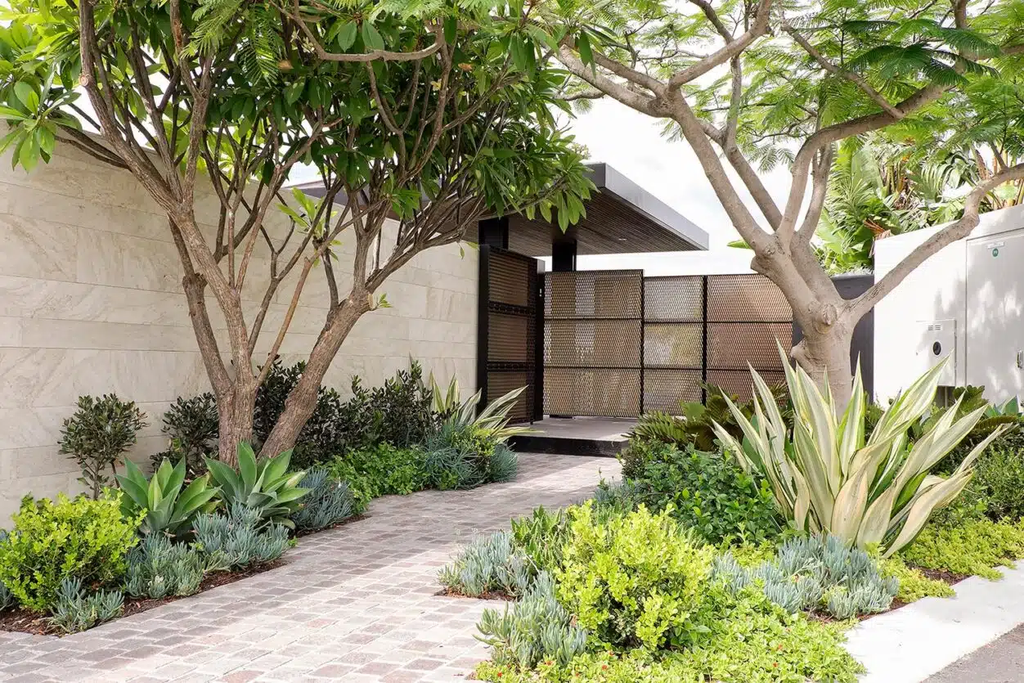
The difference between a property and a home is what happens outside the walls. A house sitting on raw, unfinished land, without paths connecting the front door to the driveway, without retaining walls managing the slope, without defined garden beds, usable outdoor areas, or a lawn that invites you to walk barefoot across it, is a house that is not yet finished. The landscaping and hardscaping are what complete the picture.
Landscaping is the living side: lawns, gardens, trees, shrubs, and the irrigation systems that keep them alive. Hardscaping is the structural side: retaining walls, paths, steps, edging, fire pits, paved areas, and the built elements that give shape and function to outdoor spaces. Together, they transform a block of land, whether it is a suburban quarter-acre, a five-acre lifestyle property, or a working rural holding, into a space that is functional, attractive, and genuinely enjoyable to use.
This guide covers the full scope of landscaping and hardscaping services available to Australian property owners. It explains what each service involves, how to plan a project that delivers lasting results, how to evaluate contractors, and the practical considerations that determine whether your outdoor space becomes the asset you envisioned or an ongoing source of frustration and expense.
What Landscaping and Hardscaping Services Actually Include
The scope of professional outdoor property improvement is broader than most property owners realise when they first start planning. Understanding the full range helps you think about your project holistically rather than addressing individual elements in isolation.
The Landscaping Side: Living Elements
Landscaping covers everything that grows, and the systems that support its growth.
Lawn preparation and installation. This includes soil testing, levelling, topsoil application, and the installation of turf or seeding. The soil preparation is as important as the turf itself. A lawn laid on compacted, nutrient-poor subsoil will struggle regardless of how premium the turf variety is. Proper preparation creates the conditions for a lawn that establishes quickly and thrives long-term.
Garden bed design and planting. Plant selection for Australian conditions, particularly in Perth’s Mediterranean climate with hot, dry summers and mild, wet winters, determines whether your garden thrives with minimal intervention or requires constant watering, feeding, and replacement. Native and drought-tolerant species reduce water consumption, maintenance effort, and long-term cost.
Tree planting and removal. Strategic tree placement provides shade, privacy screening, windbreaks, and visual framing. On rural and acreage properties, tree management may also involve clearing for fire breaks, removing hazardous or diseased trees, and planting revegetation corridors.
Reticulation and irrigation. An automated reticulation system delivers water to lawns and garden beds at the right volume, at the right time, with minimal waste. In Perth, where water restrictions apply during summer, a well-designed system maximises the benefit of every litre. Pipe routes, zones, controller programming, and the inclusion of sleeves beneath paths and driveways for future maintenance access all need to be planned before installation.
Mulching and soil improvement. Organic mulch suppresses weeds, retains soil moisture, moderates soil temperature, and breaks down over time to improve soil structure. The type, depth, and application method all affect performance.
The Hardscaping Side: Structural Elements
Hardscaping covers the permanent, non-living structures that define, support, and connect the outdoor space.
Retaining walls. On sloping blocks, retaining walls manage level changes, prevent erosion, and create usable terraces from land that would otherwise be too steep to use. Materials include timber, concrete block, natural stone, gabion baskets, and engineered systems. The height, soil conditions, and drainage requirements determine whether engineering certification is required.
Paths, steps, and walkways. Connecting the house to the driveway, the shed, the clothesline, the garden, and the outdoor entertaining area with defined pathways transforms how you move around your property. Materials include compacted gravel, pavers, natural stone, concrete, and timber. The choice depends on the traffic level, the aesthetic, the drainage requirements, and the budget.
Garden edging. Edging defines the boundary between lawn and garden beds, preventing grass encroachment, containing mulch, and creating clean visual lines. Corten steel edging has become increasingly popular for its modern aesthetic and durability, but concrete, timber, and stone edging all have their place depending on the design intent.
Fire pits and outdoor entertaining areas. Purpose-built fire pit areas, outdoor kitchens, and entertaining spaces extend the liveable area of the home and create focal points for social activity. The groundwork, including excavation, compaction, drainage, and surrounding hardscaping, is as important as the feature itself.
Raised garden beds. Raised beds provide controlled growing environments with improved drainage, better soil quality, and easier access for maintenance. They are particularly valuable on properties with poor native soil, heavy clay, or waterlogging issues.
Water features. Ponds, fountains, and cascading water elements add visual and auditory interest to outdoor spaces. The groundwork, including excavation, liner installation, pump housing, and electrical supply, requires professional preparation.
Garden features and art installations. Sculptures, ornamental rocks, arbours, and other decorative elements require placement preparation including clearing, excavation, levelling, and compacted bases that support the feature’s weight and prevent settlement.
How to Plan a Landscaping and Hardscaping Project
A well-planned project produces better results at lower cost than one that evolves without direction. The planning process should be thorough, sequential, and collaborative between you and your contractor.
Start With the Land
Before deciding what goes where, understand what you are working with.
- Walk the property at different times of day. Note where the sun falls in the morning, midday, and evening. Sun exposure determines plant placement, entertaining area orientation, and shade structure positioning.
- Observe how water behaves during and after rain. Note where it flows, where it pools, and where erosion is occurring. Drainage must be addressed before any landscaping or hardscaping is installed on top of it.
- Test the soil. Sandy soils drain quickly but hold few nutrients. Clay soils hold moisture but drain poorly. Knowing your soil type determines what amendments are needed, what plants will thrive, and how deep your retaining wall footings need to be.
- Identify any trees or vegetation that are protected by local council regulations. Many councils restrict the removal of significant trees, particularly on rural and semi-rural properties.
Define Your Priorities
Not everything needs to happen at once, and staging the work across multiple phases is often the most practical approach.
Priority LevelWhat to AddressWhy It Comes FirstEssentialDrainage, retaining walls, erosion controlPrevents ongoing damage to the propertyInfrastructurePaths, steps, driveway connections, reticulationEnables functional use of the outdoor spaceFunctionalLawn, garden beds, fencing, fire breaksCreates usable, maintained outdoor areasLifestyleFire pit, entertaining area, water feature, edgingAdds enjoyment and property value
This sequencing ensures each phase builds on the previous one and that money spent early is not undermined by work done later.
Think About Maintenance Before You Build
Every element you add to your outdoor space requires ongoing maintenance. A lawn needs mowing, fertilising, and watering. Garden beds need weeding, mulching, and pruning. Reticulation needs seasonal adjustment, repair, and winterisation. And even hardscaping requires periodic attention, whether that is repointing retaining walls, sealing pavers, or clearing drainage channels.
Design your landscape with your maintenance capacity in mind. If you have limited time for garden care, lean toward hardy native plantings, low-maintenance ground covers, and hardscaping that reduces the area requiring active maintenance. If you enjoy gardening and want productive beds, dedicate the time and budget to soil preparation, irrigation, and plant selection that supports that goal.
Key Considerations for Different Property TypesSuburban Residential Properties
Suburban blocks present specific challenges. The space is limited, the neighbours are close, and every element must work together in a compact footprint.
- Privacy screening using plants, fencing, or a combination of both creates separation from adjacent properties
- Maximising usable space through level changes, retaining, and defined zones turns a small backyard into an outdoor room
- Street appeal through front yard landscaping increases property value and creates a welcoming approach to the home
- Drainage management on smaller blocks is critical because water has less room to disperse naturally
Acreage and Lifestyle Properties
Properties of one to ten acres present a different scale of challenge. The area is larger, the terrain is more variable, and the infrastructure requirements extend beyond the immediate house surrounds.
- Define the managed zone. You do not need to landscape ten acres. Define the area immediately around the house and outbuildings as the managed zone, and design your landscaping and hardscaping within that boundary. The rest can be managed through mowing, fire break maintenance, and selective planting.
- Connect the spaces. Paths and walkways connecting the house to the shed, the dam, the paddocks, and the gate create structure and accessibility across the broader property.
- Manage water across the site. On larger blocks, water management is a landscape-scale challenge. Swales, contour banks, and drainage channels direct water away from buildings and infrastructure toward dams, soakage areas, or natural watercourses.
- Fire protection. In bushfire-prone areas, the landscaping within the asset protection zone around buildings must comply with local planning requirements. This affects plant selection, mulch type, and the placement of combustible materials relative to the house.
Rural and Working Properties
Rural properties used for farming, equestrian, or pastoral activities need outdoor improvements that are functional first and aesthetic second.
- Hardstand areas around sheds, yards, and loading points prevent mud and dust problems
- Stock containment through fencing, gates, and yard design integrates with the broader property management
- Access tracks connecting paddocks, water points, and infrastructure need to handle heavy vehicles and wet conditions
- Homestead surrounds provide the transition between the working property and the living space, with robust materials that handle rural conditions
Choosing the Right Contractor
The contractor you choose directly affects the quality, durability, and appearance of the finished result. Outdoor work is exposed to weather, traffic, and time in a way that interior work is not, so the quality of installation matters more, not less, than it does inside the house.
Experience With Your Property Type
A contractor who primarily works on suburban courtyards may not have the equipment, experience, or understanding needed for a five-acre lifestyle property with significant slope, drainage challenges, and a 200-metre driveway. Conversely, a contractor who specialises in broadacre earthworks may not deliver the detailed finishing that a small courtyard garden requires.
Ask about the contractor’s experience with properties similar to yours. Request examples of completed projects, particularly those involving similar terrain, scale, and design elements.
Equipment and Capability
Professional landscaping and hardscaping requires equipment matched to the scale of the project. A contractor who arrives with a wheelbarrow and a shovel to level a half-acre lawn is not equipped for the job. Conversely, a contractor with heavy earthmoving equipment has the capacity to prepare sites, move significant volumes of material, and build retaining walls efficiently.
Integrated Services
The most cost-effective and cohesive results come from a single provider who can coordinate all elements of the project. When the earthworks provider, the retaining wall builder, the landscaper, and the reticulation installer are all different companies, the coordination becomes your responsibility, and the risk of conflicts, rework, and communication gaps increases.
A provider who handles site preparation, earthworks, drainage, retaining walls, paths, garden beds, lawns, and reticulation as an integrated project delivers a more cohesive result at lower total cost.
If you are in Perth’s southern suburbs, the Peel region, or the surrounding rural areas and looking for professional Landscaping & Hardscaping services for your home or acreage property, connecting with a local provider who understands the terrain, the climate, and the specific demands of your property type is the most practical starting point.
Quoting and Communication
A quality contractor will visit your property before providing a quote. They will walk the site with you, discuss your priorities, assess the terrain and soil conditions, and provide a written quote that specifies the scope of work, the materials to be used, the estimated timeline, and the total cost.
Be cautious of quotes provided without a site visit. Landscaping and hardscaping work is site-specific, and a quote that does not account for your property’s actual conditions is unlikely to be accurate.
Understanding the Costs
Outdoor property improvement costs vary significantly depending on the scope, the materials, the terrain, and the property size. Understanding the cost drivers helps you plan your budget and evaluate quotes.
Cost Drivers
- Site preparation. Clearing, excavation, levelling, and soil improvement add cost before any visible work begins. On sloping or rocky sites, preparation can be a significant portion of the total budget.
- Materials. Natural stone costs more than concrete pavers. Corten steel edging costs more than timber. Premium turf costs more than seed. The materials you choose affect both the upfront cost and the long-term maintenance requirement.
- Retaining walls. Wall cost increases with height, length, and the engineering requirements. A wall under 500mm is relatively simple. A wall above 500mm may require engineering certification, deeper footings, and drainage provisions.
- Reticulation. System cost depends on the number of zones, the length of pipe runs, the controller type, and whether the system needs to accommodate future expansion.
- Access and logistics. Properties with difficult access, steep terrain, or long distances from material suppliers may incur additional delivery and mobilisation costs.
Budgeting Approaches
ApproachHow It WorksBest ForFull projectComplete design and construction in a single phaseProperties where the full scope is defined and the budget allowsStaged phasesDivide the project into priority-based stages over months or yearsProperties where the budget is limited or the scope is largeCore plus additionsInstall the essential infrastructure first, add lifestyle features laterNew builds where the budget is consumed by the house construction
Staging allows you to spread the cost while ensuring each phase builds on the previous one. Your contractor can help you develop a staged plan that addresses the highest priorities first while preparing the infrastructure for future additions.
Maintaining Your Landscape After Installation
Professional installation is the beginning, not the end. Ongoing maintenance protects your investment and keeps the outdoor space looking and functioning as it was designed to.
Seasonal Maintenance Calendar
SeasonLandscaping TasksHardscaping TasksSpringFertilise lawns and gardens, adjust reticulation, plant warm-season speciesInspect retaining walls for winter movement, clear drainage channelsSummerMow regularly, monitor reticulation, mulch to retain moistureCheck path and paving joints for settlement, inspect edgingAutumnReduce watering, plant cool-season species, prune deciduous plantsClean fire pit area, inspect steps and walkways for trip hazardsWinterMinimal lawn activity, address drainage issues, remove debrisCheck retaining wall drainage, repair any erosion damage
Long-Term Maintenance
- Reticulation should be inspected annually for leaks, blocked nozzles, and coverage gaps. Adjust sprinkler heads and controller timing seasonally.
- Retaining walls should be monitored for movement, cracking, or drainage failure. A wall that is not draining properly is under increasing pressure from saturated soil behind it.
- Lawns benefit from annual aeration, top-dressing, and fertilisation to maintain density and health.
- Mulch should be topped up annually as it decomposes. Maintain a depth of 50 to 75mm for effective weed suppression and moisture retention.
- Paths and pavers may need re-levelling, joint filling, or sealing over time as the substrate settles.
The Value That Quality Landscaping and Hardscaping Adds
Well-executed outdoor improvements deliver value in three dimensions.
Property value. Quality landscaping and hardscaping consistently increase property values. Real estate research across Australian markets shows that well-presented outdoor spaces improve buyer interest, reduce time on market, and support higher sale prices. The investment typically returns two to five times its cost in increased property value.
Liveability. A well-designed outdoor space extends the functional living area of your home. An entertaining area, a fire pit, a children’s play area, or simply a beautiful garden to sit in adds daily enjoyment that no amount of interior renovation can replicate.
Functionality. On rural and acreage properties, professional hardscaping solves practical problems. Retaining walls create usable terraces. Paths prevent muddy tracks. Drainage protects buildings. And hardstand areas keep vehicles and equipment off soft ground. These are not aesthetic improvements. They are infrastructure that makes the property work.
Conversely, poor quality work detracts from all three. A retaining wall that leans, a lawn that dies, paths that wash out, and drainage that creates new problems rather than solving old ones all signal to the owner and to prospective buyers that the property has issues.
Frequently Asked Questions
What is the difference between landscaping and hardscaping?
Landscaping refers to the living elements of outdoor property improvement, including lawns, gardens, trees, shrubs, and the irrigation systems that support them. Hardscaping refers to the non-living structural elements, including retaining walls, paths, steps, edging, paving, fire pits, and other built features. Most outdoor projects involve both, and the best results come from designing them as an integrated whole rather than addressing each in isolation.
How much do landscaping and hardscaping services cost?
Costs vary significantly depending on the scope, materials, terrain, and property size. Small suburban projects may cost $5,000 to $15,000. Medium-scale projects involving retaining walls, paths, lawn, and garden beds on a standard residential block typically range from $15,000 to $50,000. Large-scale projects on acreage properties can exceed $50,000 to $100,000 or more depending on the extent of earthworks, retaining, and infrastructure required. The most reliable way to budget is to obtain quotes from contractors who have inspected your property in person.
How long does a landscaping and hardscaping project take?
Small projects may take one to two weeks. Medium-scale residential projects typically take two to six weeks. Large-scale projects on acreage or rural properties can take several weeks to several months depending on the scope, the weather, and whether the work is staged. Your contractor should provide a timeline estimate as part of their quote, including allowances for weather delays.
Do I need council approval for landscaping and hardscaping work?
Retaining walls above a certain height, typically 500mm in most WA local government areas, may require a building permit and engineering certification. Significant earthworks that alter the natural ground level may require development approval. Tree removal on properties subject to vegetation protection orders requires council approval. And any work affecting drainage that flows onto neighbouring properties or public land may need to be assessed. Check with your local council before commencing work that involves retaining walls, significant level changes, or tree removal.
What is the best time of year to start a landscaping project in Perth?
Autumn (March to May) and spring (September to November) are the ideal planting seasons in Perth. The moderate temperatures allow plants to establish root systems before the stress of summer heat or winter cold. Hardscaping work can be done year-round, though heavy winter rain may delay earthworks and concrete-based installations. If your project involves both landscaping and hardscaping, starting the hardscaping elements in late summer or autumn and following with planting in autumn provides the best sequencing.
