
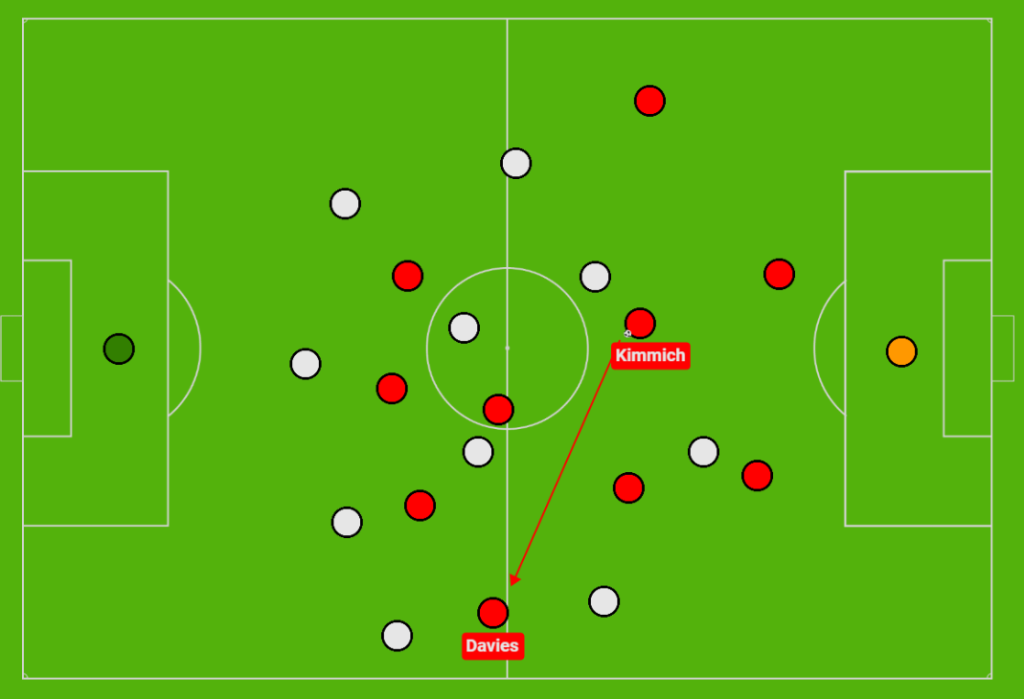
The 2021/2022 Bundesliga redefined full-back influence. No longer peripheral defenders, many acted as the league’s key initiators of width and chance creation. Their roles shaped attacking volume, corner counts, and shooting zones, blurring the tactical lines between defense and midfield. For analysts and bettors, understanding where and how these full-backs generated momentum clarified total shot probabilities and corner market value.
Why Full-Back Attacking Play Transformed Match Rhythm
Modern Bundesliga teams depend on wide overloads to destabilize pressing structures. Full-backs operating high convert possession cycles into advanced territory entry. Their vertical engagement often dictates whether a game becomes transition-heavy or control-oriented. In 2021/2022, Bundesliga’s full-backs averaged over 4.2 shot-creating actions per match combined—numbers closer to midfield creators than defenders.
Statistical Patterns Across High-Activity Full-Backs
Investigating overlapping frequency, final-third crosses, and recovery speed exposed how tactical profiles diverged by team model. Wing-oriented sides recorded higher corner totals, while inverted full-backs triggered short-range combinations.
Table: Bundesliga 2021/2022 – Most offensive full-backs by creation output
| Player | Team | Key Passes/90 | Crosses/90 | Corners Earned (Est.) | Tactical Role Type |
| Raphaël Guerreiro | Borussia Dortmund | 2.2 | 4.8 | 2.0 | Inverted Creator |
| Alphonso Davies | Bayern Munich | 1.7 | 5.1 | 2.5 | Overlap Accelerator |
| David Raum | Hoffenheim | 2.5 | 6.2 | 3.1 | Cross Specialist |
| Christian Günter | SC Freiburg | 2.3 | 5.7 | 3.0 | Hybrid Operator |
| Borna Sosa | Stuttgart | 2.1 | 5.3 | 2.8 | Long-Range Deliverer |
These players not only assisted goals but also indirectly boosted total shot and corner metrics due to sustained pressure within wide quadrants. Teams without such depth relied more on central simulation, lowering their overall shot count consistency.
Structural Impact on Team Chance Quality
Aggressive full-backs stretch opposition blocks, converting potential turnovers into secondary chances. When both sides deploy wide attacking defenders, matches tilt toward high shot frequency and diverse entry vectors. Corners rise from forced deflections, and blocked crosses amplify xG variance through chaos in the penalty zone.
Tactical Mechanisms Behind Corner Generation
Bundesliga teams operationalized full-backs in three key offensive mechanisms:
- Overlap chains – Sequential movement with wide midfielders to overload defensive flanks.
- Cut-back priorities – Late overlapping runs leading to blocked deliveries (corner triggers).
- Switch diagonals – Cross-field switches toward distant full-backs for unopposed entry.
These patterns rewarded repetition: the more predictable the overlap cycle, the higher the corner output due to consistent opponent deflections. For bettors evaluating total corner lines, identifying full-back frequency often predicted escalation before odds shifted.
Translating Tactical Behavior into Analytical Forecasting with UFABET
When applied in probability structure, full-back metrics integrate naturally into pre-match modeling systems. Within data-anchored environments enabling reactive updates, ยูฟ่า168 offers functionality allowing correlation between line movements and team-wide buildup width. Through layered data visualization, users tracking full-back heatmaps can anticipate upward drift in shot and corner totals once attacking shapes expand. This capability transforms observation into actionable precision—merging tactical insight with timing accuracy around Bundesliga’s most width-driven fixtures.
Why Some Systems Limit Full-Back Offensive Output
Not all managers permit constant advancement. Clubs prioritizing compact rest-defense lines restrict overlapping transitions, reducing corner and shot growth. Teams such as Wolfsburg or Augsburg relied on static wide positioning, producing 20–30% fewer corners per match. This constraint fostered conservation rather than creativity but stabilized defensive metrics—a trade-off central to betting models distinguishing open from closed play.
Comparison Between Progressive and Conservative Full-Back Roles
H3: Conditional Tactical Outcomes
- Progressive Role: Boosts overall shot count by expanding possession to wings, increasing corner dependency as defenses collapse.
- Conservative Role: Limits exposure and tempo, leading to stagnant shot volume and lower total goals but enhanced counter coverage.
Recognizing which system applies each week ensures accurate projection of both shot and corner probabilities within Bundesliga matchups.
Interaction Between Full-Back Activity and casino online Pattern Recognition
For bettors expanding probabilistic reasoning beyond sports, understanding variable feedback cycles builds discipline. Within risk-assessment systems, a casino online environment provides microcosmic exposure to pattern loops—probability outcomes impacted by player decision frequencies. Translating that mindset into football analysis encourages grounding in repetition and signal identification. Spotting repeating wide overload structures mirrors recognizing recurrent betting probabilities under controlled variance.
Reading Form Cycles and Defensive Adjustment
Toward late-season 2022, defenders adapted by forcing full-backs into underlaps rather than overlaps, reducing cross volume yet opening half-space passes. Savvy bettors observed that reduced crossing did not lower total shots but shifted angles—shorter expected goals values but similar attempt frequencies. This distinction separated reactive odds traders from data-first interpreters.
Summary
Bundesliga 2021/2022 underscored the tactical revolution of attacking full-backs. Their constant forward thrust drove team creativity, increased shooting frequency, and inflated corner rates across multiple clubs. Understanding positional width, delivery patterns, and integration within offensive systems allowed analysts and bettors alike to anticipate both scoring opportunities and set-piece volume. In betting terms, recognizing how full-backs build systemic momentum turned positional data into durable advantage—proof that in modern football, boundaries between defense and creation no longer exist but evolve through width itself.
