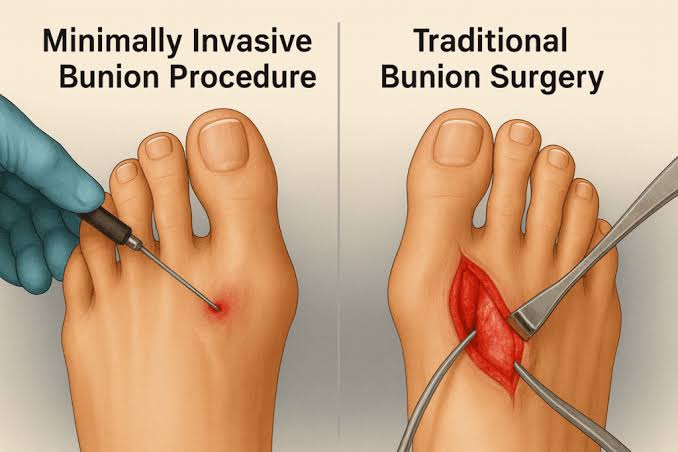
Minimally invasive bunion surgery trims the incision from several inches down to a few millimeters and lets many patients bear weight in a surgical shoe within days, while traditional open bunion surgery still holds the advantage for severe deformities, prior failed surgeries, and complex joint damage. Review bunion surgery recovery times by technique and bunion severity before scheduling a 2026 procedure, because the right choice depends on how advanced the deformity is, not just which option sounds less invasive. Naples Podiatrist (Family Foot & Leg Center, PA) performs both approaches across its Southwest Florida locations and matches the technique to the foot, not the other way around.
Bunion surgery recovery isn’t one timeline. Two patients with the same diagnosis can heal on different schedules depending on whether the surgeon used a traditional open osteotomy or a minimally invasive percutaneous technique, how severe the bunion was before surgery, and whether bone, soft tissue, or both needed correction. This comparison breaks the two approaches down by incision size, weight-bearing timeline, swelling duration, candidacy, activity return, and cost, using criteria that match what foot and ankle surgeons actually evaluate before recommending one technique over the other.
Verdict Summary
- Incision size and scarring: Minimally invasive bunion surgery — small puncture-style incisions versus a multi-inch open incision.
- Early weight-bearing: Minimally invasive bunion surgery — many patients transition to a post-op shoe sooner than with an open approach.
- Swelling resolution: Minimally invasive bunion surgery — less soft tissue disruption generally means less prolonged swelling.
- Return to low-impact activity: Minimally invasive bunion surgery — often a faster path back to walking, golf, and pickleball for mild-to-moderate cases.
- Correcting severe or complex deformity: Traditional open bunion surgery — direct visualization allows more extensive bone and joint correction.
- Revision surgery after a failed prior procedure: Traditional open bunion surgery — surgeons typically prefer open access when prior hardware or scar tissue complicates the joint.
How We Compared
The dimensions below reflect what a foot and ankle surgeon actually weighs during a surgical consultation: bunion severity on X-ray, bone healing time, soft tissue trauma, candidacy criteria, and the patient’s activity goals. None of this replaces an in-person evaluation — an X-ray and physical exam determine which technique fits a specific foot, and how to tell if a bunion needs surgery covers the signs that push a case from conservative care toward the operating room.
Minimally Invasive Bunion Surgery: What It Is and Who It Fits
Minimally invasive bunion surgery uses small incisions, often just a few millimeters, with the bone cut and realigned using specialized burrs under X-ray guidance instead of through a fully open joint. The technique targets patients with mild to moderate bunions who want a quicker return to shoes, less visible scarring, and less soft tissue disruption. Naples Podiatrist offers minimally invasive bunion surgery across its Southwest Florida locations, including Naples, Estero, Fort Myers, Cape Coral, Port Charlotte, and Sarasota, for patients whose deformity and bone quality make them good candidates. Strengths include smaller scars, often less initial post-operative pain, and in many protocols an earlier transition to weight-bearing in a surgical shoe. Minimally invasive bunion surgery is not universal, though — bone healing still takes time regardless of incision size, and not every deformity qualifies. Pricing varies by severity and whether hardware is used; bunion surgery cost in Southwest Florida outlines the factors that move the number. The main limitation: more severe deformities or joints with significant arthritis may need more correction than a minimally invasive approach can deliver in one pass.
Traditional Open Bunion Surgery: What It Is and Who It Fits
Traditional open bunion surgery uses a longer incision over the joint, giving the surgeon direct visualization of the bone, ligaments, and joint surfaces. It fits patients with severe deformities, significant joint arthritis, or those undergoing revision surgery after a prior bunionectomy did not hold. Strengths include a long track record, the ability to address multiple structural problems in one operation, and more surgical options for fixation with plates or screws when bone quality demands it. The tradeoff is a larger scar, typically more initial swelling, and a non-weight-bearing or protected-weight-bearing period that can run longer than many minimally invasive protocols. Bunionectomy candidates with complex deformities are often steered toward the open technique specifically because the surgeon needs full access to the joint.
Incision Size and Scarring: Minimally Invasive vs Traditional
Incision size is the most visible difference between the two techniques and matters for patients concerned about scar tissue around the joint. Minimally invasive bunion surgery uses incisions measured in millimeters, which generally means a smaller, less noticeable scar once healed. Traditional open bunion surgery requires a longer incision to give the surgeon full access to the bone and joint capsule, which produces a longer scar line along the side of the foot. Winner: Minimally invasive bunion surgery because smaller incisions mean less visible scarring and less disrupted soft tissue around the joint.
Weight-Bearing Timeline: Minimally Invasive vs Traditional
How soon a patient can put weight on the foot affects daily life more than almost any other recovery factor. Minimally invasive techniques often allow a faster transition to a protective post-op shoe because less soft tissue was disturbed to reach the bone. Traditional open surgery frequently requires a longer period of protected or non-weight-bearing status, particularly when plates, screws, or more extensive bone correction are involved. Bone itself still needs roughly six to eight weeks to heal regardless of incision size, per patient education materials published by the American College of Foot and Ankle Surgeons — but the day-to-day weight-bearing restrictions during that window often differ by technique. Week-by-week bunion surgery recovery timeline details what each stage of healing typically involves. Winner: Minimally invasive bunion surgery for patients who qualify, because smaller soft tissue trauma generally supports an earlier functional recovery.
Swelling and Bruising: Minimally Invasive vs Traditional
Swelling duration affects when a patient can comfortably wear regular shoes again. Minimally invasive bunion surgery generally produces less initial swelling because the soft tissue envelope around the bone stays mostly intact. Traditional open surgery disturbs more soft tissue to expose the joint, which commonly means more swelling in the first several weeks after surgery. Swelling from either technique can take months to fully resolve, which is normal after any foot surgery and not a sign something went wrong. Winner: Minimally invasive bunion surgery on the early swelling timeline, though both techniques require patience through the final stretch of healing.
Candidacy for Severe Deformity: Minimally Invasive vs Traditional
This is the dimension where minimally invasive surgery does not win, and that matters for anyone choosing based on recovery speed alone. Minimally invasive technique works best on mild to moderate bunions with reasonable bone quality and no significant joint arthritis. Traditional open bunion surgery gives the surgeon the visualization needed to correct larger angular deformities, address arthritic joint surfaces, or revise a bunion that returned after a prior surgery. Winner: Traditional open bunion surgery because direct access to the joint allows more extensive correction when the deformity is advanced. Can bunions come back after surgery explains why severity and technique both factor into recurrence risk.
Return to Activity: Minimally Invasive vs Traditional
For the mid-life and senior patients who make up a large share of bunion surgery patients, getting back to pickleball, golf, or regular walking matters as much as the surgery itself. Minimally invasive bunion surgery’s smaller incisions and often earlier weight-bearing timeline tend to support a quicker return to low-impact activity for patients with mild to moderate deformities. Traditional open surgery patients generally need a longer protected period before resuming the same activities, particularly if hardware was placed or the correction was more extensive. Winner: Minimally invasive bunion surgery for qualifying patients prioritizing a faster return to active routines in 2026.
Cost Considerations: Minimally Invasive vs Traditional
Cost depends heavily on deformity severity, whether hardware is used, and insurance coverage rather than technique alone. Minimally invasive bunion surgery can sometimes reduce certain costs tied to extended recovery, but it is not automatically cheaper than the traditional approach once imaging, anesthesia, and follow-up visits are factored in. Bunion surgery cost in Southwest Florida walks through what typically drives the final number for either technique. Tie — cost is driven more by severity and insurance than by which incision style a surgeon uses.
Which Should You Choose?
An active senior with a mild-to-moderate bunion who wants to get back to pickleball or golf with the smallest possible scar is usually a strong candidate for minimally invasive bunion surgery, assuming imaging confirms good bone quality. A patient with a severe deformity, significant joint arthritis, or a bunion that returned after a previous surgery is typically better served by the traditional open approach, since the surgeon needs full visualization to correct the underlying structural problem. Someone unsure which category they fall into should start with an exam and X-ray rather than picking a technique first — is bunion surgery worth it covers how surgeons weigh pain level, deformity size, and daily function before recommending surgery at all. Patients juggling work on their feet all day or frequent travel to Southwest Florida’s golf courses and pickleball courts should also factor in which technique gets them back to those activities sooner.
FAQ
Does Naples Podiatrist perform minimally invasive bunion surgery?
Yes — Naples Podiatrist offers minimally invasive bunion surgery for qualifying patients across its Southwest Florida locations, alongside traditional open technique for more severe or revision cases.
How long is recovery after minimally invasive bunion surgery compared to traditional surgery?
Bone healing takes roughly six to eight weeks either way, but minimally invasive patients often transition to a protective shoe and resume light activity sooner because less soft tissue was disturbed during surgery.
Can every bunion be treated with the minimally invasive technique?
No. Severe deformities, significant joint arthritis, and revision cases after a prior failed bunionectomy generally need the traditional open approach for full correction.
Will my scar be smaller with minimally invasive bunion surgery?
Generally yes — the incisions are measured in millimeters rather than inches, which typically produces a smaller, less visible scar once healed.
How do I know which technique is right for my bunion?
An X-ray and physical exam with a board-certified foot and ankle surgeon at Naples Podiatrist determines deformity severity, bone quality, and joint health, which together point to the appropriate technique.
Is minimally invasive bunion surgery covered by insurance the same way as traditional surgery?
Coverage depends on the plan and medical necessity rather than the technique itself; reviewing bunion surgery cost in Southwest Florida is a useful starting point before scheduling either option.
Conclusion
Minimally invasive bunion surgery wins on incision size, early weight-bearing, swelling resolution, and return to activity for patients with mild to moderate deformities, while traditional open bunion surgery remains the better choice for severe deformities, significant arthritis, and revision cases. Bunion surgery recovery times in 2026 still hinge more on deformity severity and bone healing biology than on which incision style a surgeon chooses, so the right starting point is an exam, not a technique preference. Naples Podiatrist evaluates both options at its Southwest Florida locations, from Naples to Fort Myers, Cape Coral, Port Charlotte, and Sarasota, and matches the surgical approach to the deformity rather than defaulting to one method for every patient.