
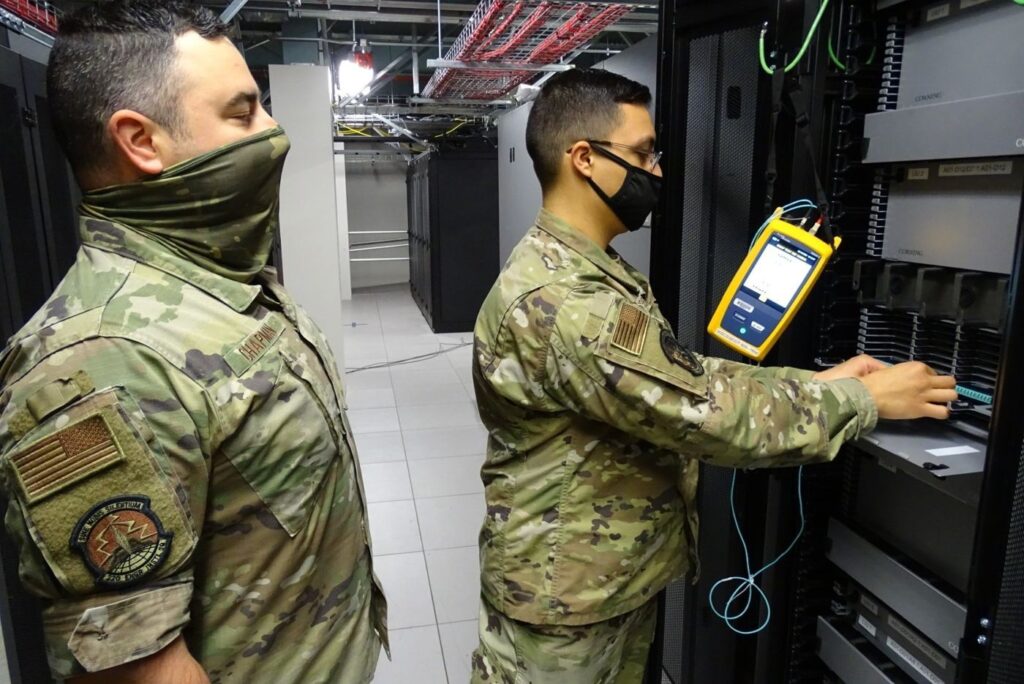
A fibre optic cable laid alongside a pipeline can do far more than carry data: with the right instruments, the fibre itself becomes a continuous sensor, listening for the vibrations of leaks, digging machinery and even footsteps along thousands of kilometres of route. The technique, called distributed acoustic sensing, sends pulses of laser light down the fibre and analyses the faint reflections that return. Disturbances along the cable alter those reflections, allowing software to locate an event to within a few metres and classify its pattern. A leaking pipe produces a distinctive hiss, an excavator a rhythmic thumping, and a person walking a softer signature that trained systems increasingly recognise. Pipeline operators value the approach because one instrument can watch a long stretch of line that would otherwise need patrols or scattered point sensors, and because a warning can arrive while a third-party excavator is still approaching the pipe rather than after it strikes. Trials have also used the method on power cables, railways and borders, and on fibre already buried for telecommunications, turning spare capacity in existing networks into safety infrastructure at modest extra cost. The challenge is volume: a listening fibre generates enormous data and many false alarms until its software learns local conditions.
What the Evidence Shows
Operators who have deployed the technology say its real value emerges after a patient tuning period, when the system learns the normal soundscape of each section: farm machinery in one field, a busy road crossing in another, a river’s vibration at a bridge. With that baseline, genuine anomalies stand out, and control rooms can dispatch crews with a location and a likely cause instead of a vague alert. Regulators are beginning to credit such monitoring in pipeline safety cases, particularly for detecting leaks smaller than pressure-based systems notice and for preventing the third-party damage that causes many serious incidents. Privacy questions arise when fibres pass through populated areas, since the same sensitivity that hears digging can register other activity; responsible operators process the data for specific event patterns and retain as little as possible. The broader trend is toward infrastructure that reports on its own condition continuously rather than waiting for inspection cycles. Roads, bridges and cables fitted with sensing fibres can feed a live picture of stress and interference to the people responsible for them. For pipelines carrying fuel, water or captured carbon, that constant listening could prevent both environmental damage and dangerous failures, using glass threads that were being buried anyway. Reporting and analysis from sources such as IEEE Spectrum track the same developments, and specialists following fibre-optic pipeline monitoring say the direction is now consistent across independent lines of evidence.
The Wider Context
Adoption of fibre-optic pipeline monitoring follows a familiar pattern with an unfamiliar speed. Early users tolerate rough edges in exchange for advantage, mainstream users arrive when the tool disappears into existing workflows, and the market consolidates around whoever made that transition feel effortless. Vendors are racing less on raw performance now than on integration, support and trust.
What Happens Next
The realistic forecast for fibre-optic pipeline monitoring is steady integration rather than sudden replacement: embedded in products people already use, improving in increments, and regulated in proportion to its reach. The companies and institutions that plan on that basis, training staff and redesigning processes instead of chasing launches, are the ones the adoption data tends to vindicate. You can follow related developments in our coverage of technology.
