
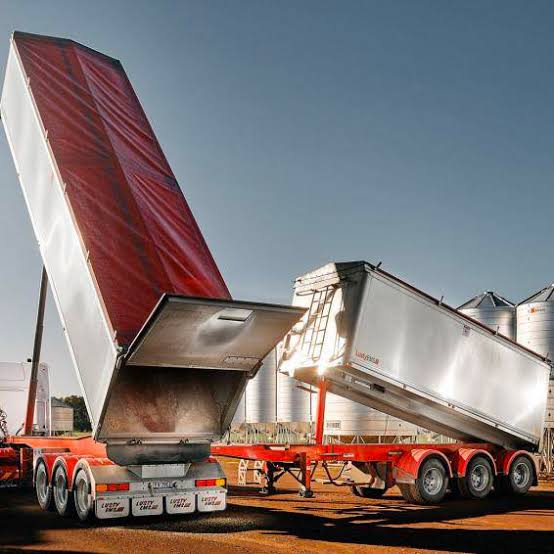
The right semi trailer turns your prime mover into a revenue-generating combination. The wrong one costs you payload, fuel, compliance headaches and money on every single trip. Flat tops suit general freight, drop decks carry taller equipment, curtainsiders protect palletised goods, tippers handle bulk materials, and skeletal trailers move shipping containers. The best choice depends on what you carry, where you go, how often you load, and what mass limits apply on your routes.
Author: Western Truck Sales Editorial Team Reviewed for: Semi trailer for business Last updated: 3 September 2026
A semi trailer is not a one-size-fits-all purchase. It is half of a working combination, and the half that determines what you can carry, how much of it, and how efficiently it loads and unloads. Get the match right and the trailer earns its keep from day one. Get it wrong and you spend the next five to ten years compensating for a specification that does not fit the work.
At Western Truck Sales, we deal with semi trailers across every configuration, from flat tops and drop decks through to tippers, tankers and specialised heavy haulage equipment. Buyers come to us with a job in mind, not a trailer in mind, and that is exactly how the conversation should start.
A trailer that almost suits the work costs money every week. A trailer that actually suits the work earns it.
Quick Reference: Semi Trailer Types at a Glance
Trailer TypeBest Suited ForTypical Payload (Triaxle)Key AdvantageKey LimitationFlat topSteel, timber, pallets, machinery, mixed freight25-28 tonnesOpen deck, load from any directionNo weather protectionDrop deckTall equipment, oversized machinery, mixed loads22-26 tonnesLower deck for taller loads within height limitsHigher tare weightCurtainsiderPalletised goods, retail delivery, weather-sensitive freight24-27 tonnesSide access, full weather protectionCurtain maintenance, not for heavy or shifting loadsTipper (end)Sand, gravel, soil, demolition waste26-30 tonnesSimple rear dischargeMust decouple for road train tippingSide tipperBulk materials, mine site haulage30-38 tonnes (road train)Tips without decouplingHigher tare, bulk materials onlySkeletalShipping containers, intermodal freightVaries by containerLightest tare, purpose-built for containersSingle-purposeLow loaderHeavy plant, oversized machinery35-50+ tonnesLowest deck heightHigh cost, specialised useTankerFuel, water, chemicals, dry bulk, food-grade liquidsVaries by productLiquid and bulk powder transportCompliance-intensive, cleaning requirements
The trailer that works best is the one matched to your most common load. Versatility matters, but not at the expense of doing your primary job well.
What Makes a Semi Trailer Different From Other Trailer Types
A semi trailer has no front axle. It connects to the prime mover through a fifth-wheel coupling, which supports the front of the trailer and transfers a portion of its weight onto the truck’s rear axle. This design is what gives the semi-trailer its name. It is only semi-supported by its own wheels.
This matters because it means the prime mover and the trailer must be specified as a combination. The truck’s fifth wheel, rear axle rating, engine power, driveline capacity and cooling system all need to match the trailer’s weight, coupling type and intended operating conditions.
Other trailer types work differently.
- Dog trailers have both front and rear axles and are towed behind a lead vehicle or another trailer using a drawbar coupling. Common in tipper and road train configurations.
- Pig trailers also have front and rear axles but are coupled via a single pivot point. Less common and generally being phased out in favour of dog configurations.
- Full trailers are fully self-supporting and used in multi-combination road train setups.
For most single-trailer freight operations, the semi trailer is the standard. It provides the best balance of payload capacity, manoeuvrability and versatility for everything from metropolitan delivery to interstate linehaul.
Choosing the Right Semi Trailer Configuration for Your Business
The configuration you choose depends entirely on your freight task. Here is how the main types match to common business applications.
Flat Top Semi Trailers
The flat top is the workhorse of general freight. No sides, no roof, no restrictions on how you load. Steel goes on by crane. Timber gets stacked by forklift. Machinery drives on or gets lifted. Containers lock onto twist-lock pins.
That flexibility makes the flat top the most common semi trailer configuration in Australia and the default choice for businesses that carry mixed freight.
- Open deck accepts loads from all sides and above
- Lowest tare weight among body-style trailers, maximising payload
- Container pins can be fitted for dual-purpose freight and container work
- Full gate sets improve load restraint versatility
- Available in 40-foot, 45-foot and 48-foot deck lengths
The trade-off is no weather protection. If your freight needs to stay dry, you need tarps, a curtainsider or a pantech.
Drop Deck Semi Trailers
Drop decks provide a lower rear platform that gives extra height clearance for taller loads. They are the standard choice for construction, plant hire and civil works operators who move excavators, loaders, compactors and generators between job sites.
Key features to evaluate include ramp type and approach angle, widening capability for oversized loads, winch and recovery equipment, and deck height. A standard drop deck sits 200 to 400mm lower than a flat top, which can be the difference between running a load under height limits or needing an oversize permit.
Curtainsider Semi Trailers
Curtainsiders use retractable fabric sides that open for loading from either side. They combine the weather protection of an enclosed van with better accessibility than a rear-loading pantech.
For palletised freight, retail distribution and weather-sensitive goods, curtainsiders offer practical advantages that flat tops cannot match. The curtain material should be UV-resistant for Australian conditions, and the track mechanism needs to handle daily operation without jamming.
Tipper Semi Trailers
Tippers are the backbone of construction, quarry and mining support. End tippers discharge from the rear. Side tippers discharge to one or both sides without decoupling, making them the preferred choice for road train configurations on mine sites and haul roads.
Body wear, hoist condition, hydraulic integrity and tailgate setup all drive the real value of a tipper. A tipper that looks good but needs a hydraulic rebuild is not a bargain.
Skeletal Semi Trailers
Skeletal trailers, or skel trailers, are stripped-down steel frames built specifically for carrying shipping containers. Twist locks secure the container, and the minimalist design produces the lightest possible tare weight.
If your business moves containers between ports, rail terminals and distribution centres, a skeletal trailer is the most efficient option. If you need to carry anything other than containers, it is not.
Low Loaders and Floats
Low loaders provide the lowest possible deck height for transporting oversized and overweight machinery. Deck heights typically range from 500mm to 700mm, and the trailer may be fitted with a hydraulic gooseneck for drive-on loading.
These are specialised, high-value units. If you only need low-loader capability occasionally, hiring one for the job may make more sense than owning one full-time.
Tanker Semi Trailers
Tanker trailers handle liquid and dry bulk transport, including fuel, water, chemicals, food-grade liquids and powdered materials. Each product type brings its own compliance, cleaning and safety requirements.
Tankers are among the most expensive and most compliance-intensive semi trailer types. The vessel material, compartment configuration, pump and valve setup, and product certification all need to match the specific product being carried.
How to Spec Your Semi Trailer Properly
Getting the specification right is where the money is made or lost. A trailer that is underspec’d for the work wears out early. A trailer that is overspec’d wastes capital and payload on unnecessary weight.
Axle Configuration
ConfigurationTypical ApplicationKey BenefitKey Trade-offSingle axleLight trailers, specific applicationsLowest tare weightLimited payload capacityTandem (dual) axleMedium-duty freight, dog trailersGood balance of capacity and manoeuvrabilityLower GVM than triaxleTriaxleStandard semi trailer applicationsBest balance for most freight tasksStandard tare weightQuad axleHeavy haulage, low loaders, tankersMaximum GVM and payloadHighest tare weight, wider turning circle
Triaxle is the standard for most semi trailer applications. Quad axle only makes sense when the payload requires it.
Suspension
Airbag suspension is now the standard for most new semi trailers. It provides a smoother ride, adjustable deck height, lower tare weight and eligibility for concessional mass schemes that can add three to five tonnes of payload on approved routes.
Mechanical spring suspension is simpler and more robust in extreme environments. Still used in some heavy-duty mining and construction applications where the operating conditions are too harsh for airbags.
Braking
Electronic Braking Systems (EBS) provide faster response and more even braking across all axles compared to traditional pneumatic systems. EBS is becoming standard on new trailers and is increasingly expected by operators running modern prime movers.
Check the brake condition thoroughly on any used trailer. Drums, linings, hoses, air tanks and slack adjusters all wear, and a full brake reline on a triaxle can run $1,500 to $3,500.
Coupling
The king pin must match your prime mover’s fifth wheel. Standard sizes are 2-inch and 3.5-inch. Check king pin wear on any used trailer. A worn king pin creates play in the coupling that affects handling and accelerates wear on the fifth wheel.
For road train work, ensure the trailer is plumbed for multi-combination coupling with the correct air and electrical connections.
Mass Limits and Route Planning
Mass limits determine how much you can legally carry, and they vary by road classification and combination type.
CombinationGeneral Access GCMConcessional Mass GCMPrime mover + single semi trailer42.5 tonnes45.5 tonnesB-double62.5 tonnes68 tonnesRoad train (double)79 tonnes87.5 tonnesRoad train (triple)115.5 tonnes127.5 tonnes
Your legal payload is the GCM minus the tare weight of the entire combination. Every kilogram saved on tare is a kilogram you can load. This is why tare weight matters as much as the sticker price.
Concessional mass requires road-friendly suspension (typically airbag) and operation on approved routes. The additional three to five tonnes of payload can make a significant difference to revenue per trip.
WA-Specific Considerations for Semi Trailer Buyers
Western Australia puts equipment through conditions that most eastern seaboard trailers never face.
- Heat. Sustained temperatures above 45 degrees in the Pilbara, Goldfields and northern regions. Tyre ratings, hydraulic fluid specifications and rubber components must all be rated accordingly.
- Dust. Unsealed roads generate abrasive dust that accelerates wear on bearings, seals, brake components and electrical connections.
- Distance. When your nearest parts supplier is 500 kilometres away, reliability is a safety issue, not just a convenience.
- Road surfaces. The range from smooth highway to corrugated gravel demands suspension systems that can handle sustained variability without causing structural fatigue.
- Coastal corrosion. Salt air along the Perth coast and WA’s northern coastline promotes corrosion on fasteners, wiring terminals and brake hardware.
A trailer that has spent its life in Victoria may look good on paper but may not handle WA conditions without modifications, upgraded components or more frequent servicing.
Buyer Checklist Before Committing
Before you sign, work through these questions.
- What load will this trailer carry most often?
- What is the maximum payload weight you need to carry per trip?
- What routes will the combination run, and what are the mass limits on those routes?
- What prime mover will pull it, and is the coupling compatible?
- Does the trailer need to be set up for B-double, road train or mine-spec work?
- What is the tyre condition and age? (Budget $3,000 to $6,000 for a full set if they need replacing.)
- What is the brake condition? (Budget $1,500 to $3,500 for a full reline if needed.)
- Does the trailer have current registration and a clean compliance history?
- Have you run a PPSR search to confirm no finance is owing?
- Does the trailer need modifications, accessories or repairs before it can work?
- Is buying the right call, or would hiring suit this job better?
- What is the practical first-year cost once purchase price, repairs, registration and setup are included?
Common Mistakes When Buying a Semi Trailer
Buying the trailer before specifying the combination. The trailer and prime mover must work together. A trailer that is perfect on paper becomes a problem if the prime mover cannot pull it efficiently or the GCM exceeds route limits. Spec the combination, not the trailer in isolation.
Ignoring tare weight. A heavier trailer means less payload on every trip. Over thousands of loads, the revenue lost to unnecessary tare weight far exceeds the cost difference between a standard and a lightweight specification.
Choosing on price alone. A low purchase price does not equal good value if the trailer needs $15,000 in tyres, brakes and repairs before it can earn a dollar. Calculate the practical first-year cost and compare on that basis.
Not checking WA suitability. A trailer that has operated in mild conditions on smooth roads may not handle WA’s heat, dust and distances without upgraded components. Inspect for heat-related deterioration, dust damage and corrosion before buying.
Skipping the PPSR search. If finance is owing on the trailer, the lender can repossess it regardless of what you paid the seller. The search costs $3.40 and takes minutes. There is no excuse for skipping it.
FAQsWhat is the most common semi trailer type in Australia?
The flat top semi trailer is the most common configuration. Its open, unobstructed deck accepts loads from all directions and suits the widest range of freight types, including steel, timber, pallets, machinery, containers and building materials. It also has the lowest tare weight among body-style trailers, maximising payload capacity.
How much does a semi trailer weigh?
A standard triaxle flat top semi trailer weighs approximately 6.5 to 8 tonnes tare. A curtainsider sits at 8 to 10 tonnes. A tipper can range from 8 to 12 tonnes depending on body size and material. Tare weight directly affects your legal payload, so lighter trailers generate more revenue per trip when operating at or near mass limits.
What licence do I need to tow a semi trailer?
You need a Heavy Combination (HC) licence to drive a prime mover towing a single semi trailer. For B-double configurations, an HC licence is also required. For road train (multi-combination) configurations, a Multi-Combination (MC) licence is needed.
How long does a semi trailer last?
A well-maintained semi trailer can provide 20 to 30 years of service. Flat tops and skeletal trailers tend to last longest due to their mechanical simplicity. Tippers, tankers and refrigerated trailers have more components subject to wear and may have shorter effective lives depending on the intensity of use.
Should I buy a new or used semi trailer?
Buy new when exact specification, long-term use and warranty coverage matter most. Buy used when the trailer suits the job, passes inspection and the practical first-year cost (purchase price plus repairs, registration and setup) represents fair value. Many buyers find the best balance by pairing a new prime mover with a quality used trailer, or vice versa.
What is the difference between a semi trailer and a dog trailer?
A semi trailer has no front axle and connects to the prime mover through a fifth-wheel coupling. A dog trailer has both front and rear axles and is towed behind a lead vehicle using a drawbar coupling. Dog trailers are commonly used behind tipper trucks and in road train configurations. Semi trailers are the standard for single-trailer linehaul and general freight combinations.
Final Word
The semi trailer is the workhorse behind most of Australia’s freight task. Whether you are running pallets between warehouses, carting equipment across construction sites, hauling bulk materials on mine haul roads or moving containers from port to depot, the right semi trailer makes the work efficient, compliant and profitable.
The wrong one makes it harder than it needs to be.
If you are in WA, call Western Truck Sales on 0417 920 022 or come and see the range at 85 Pickering Brook Road, Pickering Brook. Look at the gear properly, talk through your requirements and work out which semi trailer actually fits your business.
