
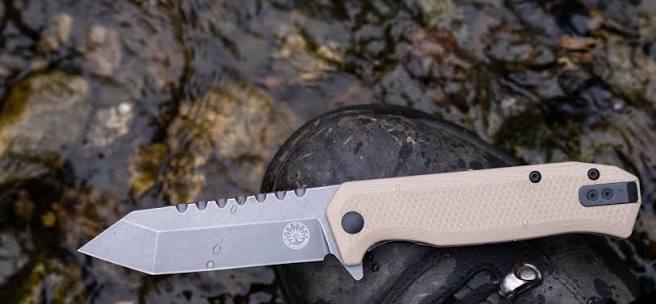
The Tanto knife is one of the most recognizable blade styles in the world. Known for its strong, angular tip and exceptional piercing ability, the Tanto has evolved from an ancient Japanese weapon into a popular choice for everyday carry (EDC), outdoor adventures, tactical applications, and knife collections.
Whether you’re buying your first Tanto knife or looking to understand why this blade shape has remained popular for centuries, this guide covers everything you need to know.
What Is a Tanto Knife?
A Tanto knife is a fixed-blade or folding knife featuring a distinctive angular point where the main cutting edge meets the secondary tip edge. Unlike the curved belly of a drop-point knife, the Tanto’s reinforced tip is designed for strength and penetration.
Originally, the Tanto was a traditional Japanese dagger carried by samurai during the feudal era. Modern knife makers have adapted this design into practical knives suited for a wide range of applications.
Today, Tanto knives are valued for their durability, precision, and unique appearance.
The History of the Tanto Knife
The Tanto dates back to Japan’s Heian period (794–1185). It was originally forged as a short sword or dagger and was commonly used as a secondary weapon by samurai.
Traditional Japanese Tantos were handcrafted using advanced forging techniques that produced exceptionally strong blades. These knives served various purposes, including close-quarters combat, self-defence, ceremonial use, and everyday cutting tasks.
Over time, modern manufacturers introduced the American Tanto, a design that retains the strong tip but features straighter edges and a more pronounced angular point, making it particularly popular among military personnel, first responders, and outdoor enthusiasts.
Key Features of a Tanto Knife
Several characteristics distinguish a Tanto knife from other blade styles.
Strong Reinforced Tip
The defining feature of a Tanto knife is its reinforced point. Because more steel supports the tip, it is much stronger than many traditional blade shapes.
This makes the blade highly resistant to breaking or bending during demanding tasks.
Angular Blade Geometry
Instead of a continuous curved edge, the Tanto features two cutting edges that meet at an angle.
This design creates exceptional piercing performance while maintaining impressive durability.
Straight Cutting Edge
Most Tanto knives have a relatively straight primary edge, making them effective for push cuts, slicing rope, cardboard, leather, and many everyday materials.
Common Uses for a Tanto Knife
The versatility of the Tanto blade has made it popular across multiple industries and activities.
Everyday Carry (EDC)
Many people choose folding Tanto knives for daily tasks such as:
- Opening packages
- Cutting rope
- Breaking down boxes
- Utility work
- General household use
The strong tip provides added confidence during demanding cutting jobs.
Outdoor Adventures
Campers, hikers, and survival enthusiasts appreciate the durability of Tanto blades for tasks including:
- Preparing kindling
- Cutting cordage
- Food preparation
- Emergency repairs
- Camp utility work
Tactical Applications
The reinforced point makes Tanto knives popular among military personnel and law enforcement professionals.
The blade’s design offers excellent penetration while maintaining structural strength under heavy use.
Collection and Display
Many collectors admire Tanto knives for their historical significance and elegant craftsmanship, particularly when handcrafted from premium materials such as Damascus steel.
If you’re interested in handcrafted blades, Stag Steel Knives offers a collection of Damascus steel knives that showcase traditional forging techniques.
Advantages of a Tanto Knife
There are several reasons why Tanto knives continue to grow in popularity.
Exceptional Tip Strength
The reinforced point is significantly stronger than many other blade profiles, reducing the risk of tip damage.
Excellent Penetration
The angular point allows the blade to pierce tough materials with ease.
Durable Edge Geometry
Because the blade distributes force effectively, it performs well during demanding cutting tasks.
Distinctive Appearance
The bold angular profile gives the Tanto knife a unique, modern look that appeals to many knife enthusiasts.
Potential Drawbacks
Although highly versatile, the Tanto blade isn’t ideal for every application.
Some limitations include:
- Less belly for slicing compared to drop-point blades
- Slightly more difficult to sharpen due to the secondary edge
- Less efficient for skinning game
- Not always the best choice for kitchen use
Understanding your intended use will help determine whether a Tanto knife is the right option.
Tanto vs Drop Point
Both blade styles have strengths depending on your needs.
| Feature | Tanto Knife | Drop Point Knife |
| Tip Strength | Excellent | Very Good |
| Piercing Ability | Excellent | Good |
| General Slicing | Good | Excellent |
| Skinning | Fair | Excellent |
| Everyday Utility | Very Good | Excellent |
| Tactical Use | Excellent | Good |
If strength and penetration are your priorities, the Tanto is difficult to beat.
Tanto vs Clip Point
Clip-point knives feature a thinner, sharper tip that excels at precision work.
Compared with a clip point, the Tanto offers:
- Greater durability
- Stronger point
- Better resistance to breakage
- Improved heavy-duty performance
Meanwhile, clip-point blades generally perform better for fine detail work and long slicing cuts.
How to Choose the Right Tanto Knife
When shopping for a Tanto knife, consider the following factors.
Blade Steel
Look for premium steels that offer excellent edge retention and corrosion resistance.
Popular options include:
- Damascus Steel
- D2 Tool Steel
- VG-10
- CPM S35VN
- 440C Stainless Steel
Fixed Blade or Folding Knife
Choose a fixed blade if you need maximum strength for outdoor or survival use.
A folding Tanto is ideal for everyday carry because it’s compact and convenient.
Handle Material
Comfort and grip are just as important as blade quality.
Popular handle materials include:
- G10
- Micarta
- Walnut
- Olive wood
- Stag horn
- Resin
Choose a handle that feels secure, even in wet conditions.
Caring for Your Tanto Knife
Proper maintenance extends the life of any knife.
To keep your Tanto performing at its best:
- Clean the blade after each use.
- Dry thoroughly before storage.
- Apply a light coat of food-safe oil to carbon steel blades.
- Sharpen both cutting edges separately.
- Store in a dry location.
Regular maintenance preserves both appearance and cutting performance.
Final Thoughts
The Tanto knife has earned its reputation through centuries of proven performance. From its origins in feudal Japan to today’s modern outdoor and tactical knives, its reinforced tip, durable construction, and distinctive design continue to make it one of the most respected blade styles available.
Whether you’re looking for an everyday carry knife, a dependable outdoor companion, or a handcrafted Damascus blade for your collection, a well-made Tanto knife offers a balance of strength, precision, and timeless style that few other blade designs can match.
Frequently Asked Questions
Is a Tanto knife good for everyday carry?
Yes. Many users choose Tanto folding knives because they offer excellent durability, strong piercing capability, and dependable everyday performance.
Are Tanto knives difficult to sharpen?
They require a slightly different technique because of the secondary edge, but with practice and the right sharpening system, maintaining a Tanto blade is straightforward.
Is a Tanto knife suitable for hunting?
While it can handle many outdoor tasks, hunters often prefer drop-point blades for skinning due to their curved cutting edge.
Are Damascus Tanto knives practical?
Absolutely. When forged from high-quality steel and properly heat-treated, Damascus Tanto knives combine attractive craftsmanship with reliable cutting performance.
You can explore handcrafted Damascus blades and learn more about traditional knife-making techniques by visiting https://www.stagsteelknives.com/.
