
Much of the public information about hair restoration is written with straight or wavy hair in mind. Photos, graft estimates and recovery tips often assume follicles that run in a fairly straight line beneath the skin. Afro-textured hair works differently, both above and below the surface, and those differences shape how a doctor assesses, plans and performs a transplant. For patients with tightly coiled hair, understanding them is the first step toward asking the right questions.
How Afro-Textured Hair Differs Below the Skin
The curl in Afro-textured hair does not begin at the surface. The follicle itself is typically curved, sometimes described as hook-shaped or spiral, and the hair grows out of an elliptical rather than round cross-section. Below the skin, the root of the follicle may sit at an angle that does not match the direction the hair takes as it exits the scalp.
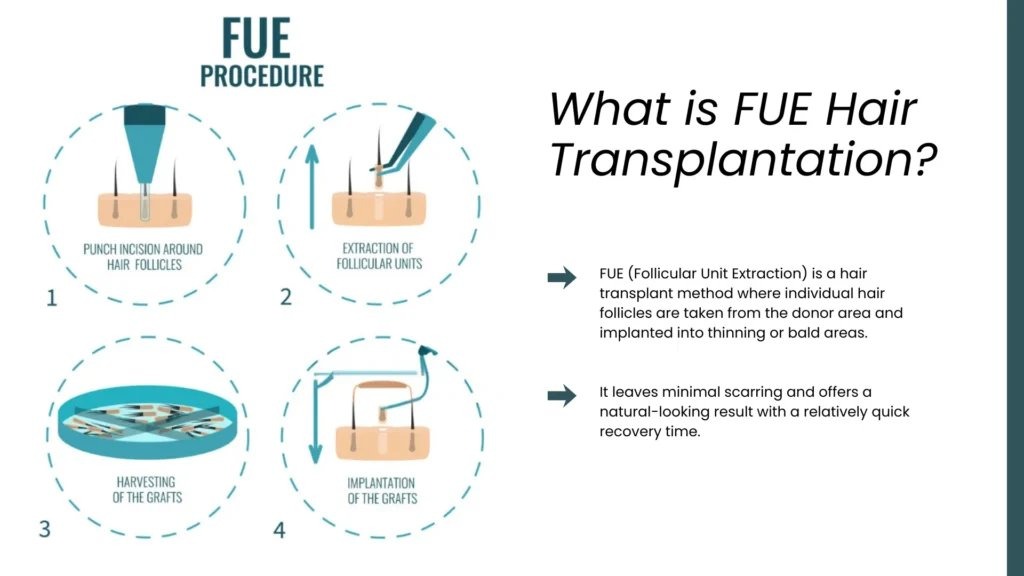
This anatomy has practical consequences. In standard follicular unit excision (FUE), a small circular punch is aligned with the visible hair and pushed around the follicle to free it. If the follicle curves away from that line, a straight punch can cut through it. Damaged grafts, often called transected grafts, may grow poorly or not at all, which wastes precious donor hair.
Other characteristics that matter
- Density: Afro-textured hair often has a somewhat lower follicle count per square centimetre than some other hair types.
- Coverage: because each coiled hair occupies more space, visual coverage can be strong even with fewer grafts.
- Skin: the scalp can be thicker and more prone to pigmentation changes after injury.
- Fragility: tightly coiled hair can be more prone to breakage at the bends of the curl.
Why Extraction Requires Experience
Because the follicle’s path is hidden, extraction is part technique and part interpretation. Experienced surgeons often begin with a few test extractions to observe how follicles in a particular patient curve, then adjust their approach accordingly. Many use wider or specially shaped punches, blunt or hybrid tips, and shallower initial scoring followed by careful dissection to release the graft without cutting it.
Speed tends to be slower than with straight hair. Each graft may need more attention, and the team may examine extracted units under magnification to check their integrity. Some doctors consider follicular unit transplantation, the strip method, in selected Afro patients because it allows grafts to be dissected under direct vision, though it leaves a linear scar and is not suitable for everyone, especially those prone to abnormal scarring.
Implantation also needs care. Recipient sites are made at angles that mirror the curl of the native hair, and grafts are handled gently to avoid crushing the curved bulb. The goal is a hairline in which the new hairs blend with the existing texture rather than standing out.
Hairline design for textured hair
Hairline shape follows its own conventions. Many Afro-textured hairlines are naturally straighter across the forehead, with softer, more rounded temple angles than the classic recessed pattern often shown in generic galleries. Copying a design made for straight hair can look out of place. Doctors with experience in textured hair usually study the patient’s original hairline in older photos, the direction of the curl at the edges and the patient’s preferred styles, including whether the hair will be worn very short, in twists or longer. The edges are typically finished with single-hair grafts so the transition into the forehead looks soft rather than abrupt.
Keloid Risk Screening
Keloids are raised scars that grow beyond the boundaries of the original wound. They occur in people of all backgrounds but are reported more frequently in people with darker skin. Because both extraction and implantation create many tiny wounds, a responsible assessment looks at keloid risk before any surgery is planned.
Screening usually involves several steps:
- asking about previous scars from piercings, cuts, acne or earlier operations
- checking for a personal or family history of keloids or hypertrophic scarring
- examining the scalp and the back of the neck for existing raised scars
- in some cases, performing a small test session and waiting several months to see how the skin heals
Where the risk appears high, a doctor may advise against surgery or suggest alternative approaches. This is a medical judgement that needs a qualified doctor, ideally a dermatologist or hair restoration specialist with experience in textured hair.
Traction Alopecia: A Different Cause
Not all hair loss in Afro-textured hair is genetic. Traction alopecia develops when hairstyles pull on the follicles repeatedly over long periods. Tight braids, cornrows, weaves, extensions and heavy locs are common triggers, and the hairline and temples are usually affected first.
Early traction alopecia can often improve if the pulling stops, because the follicles are still alive. After years of strain, however, follicles may scar and stop producing hair. At that stage, surgery may be considered, but only once the styling habits that caused the loss have changed. Transplanted grafts are vulnerable to the same tension, so continuing tight styles can undermine the result.
Distinguishing traction alopecia from pattern hair loss, scarring alopecias such as central centrifugal cicatricial alopecia, or other scalp conditions is essential. Some of these conditions are poor candidates for transplantation while they are active, which is another reason a proper diagnosis comes first.
What Changes the Price for Afro Patients
There is no single figure that applies to everyone. Prices vary and depend on grafts, technique and what is included, and Afro hair adds a few specific variables. Reviewing Afro hair transplant prices in Turkey can help a patient understand these factors before asking any provider for a written, itemised quote.
Graft count
The coiled shape of each hair can create good visual coverage with fewer grafts, but the donor area may also be less dense. The final estimate balances these two factors and depends heavily on the size of the area being treated.
Technique and instruments
Specialised punches, test extractions and more careful dissection may be used. Whether FUE, DHI or strip harvesting is recommended depends on the individual, and each approach involves different instruments and team skills.
Time in theatre
Extraction and implantation in curved follicles usually take longer. A procedure that might be completed in one day for straight hair can sometimes require more time or be split into sessions, which affects scheduling and overall cost.
Patients should also ask what the package includes, such as pre-operative tests, medication, aftercare products, accommodation and follow-up reviews, so that offers can be compared fairly.
Reading Results and Planning Recovery
Galleries of textured-hair results are useful when they show patients with similar hair types, but they need to be read carefully. Consistent lighting and angles matter, and photos should be taken at least a year after surgery. Results vary according to donor quality, skin healing and the cause of the original hair loss.
Recovery broadly follows the familiar course. Transplanted hairs commonly shed between two and eight weeks after surgery, new growth usually begins from around the third or fourth month, and the outcome is generally assessed at about twelve months. Afro-textured hair can take a little longer to show visible length because of its curl. During recovery, many doctors advise avoiding braids, extensions, chemical relaxers and tight head coverings until they confirm the grafts are secure.
Before surgery, it is worth asking a doctor:
- How much experience the team has with Afro-textured hair, and whether test extractions are planned
- Which technique is recommended for my follicle type, and why
- How keloid risk will be assessed in my case
- Which hairstyles I can return to, and when
Conclusion
Afro-textured hair can be restored, but it rewards careful assessment and experienced hands. Curved follicles, keloid risk and traction-related loss all shape the plan, and they also explain why time and cost can differ from other cases. A diagnosis from a qualified doctor familiar with textured hair, an honest discussion of risks and a realistic recovery timeline form the basis of a sound decision.
