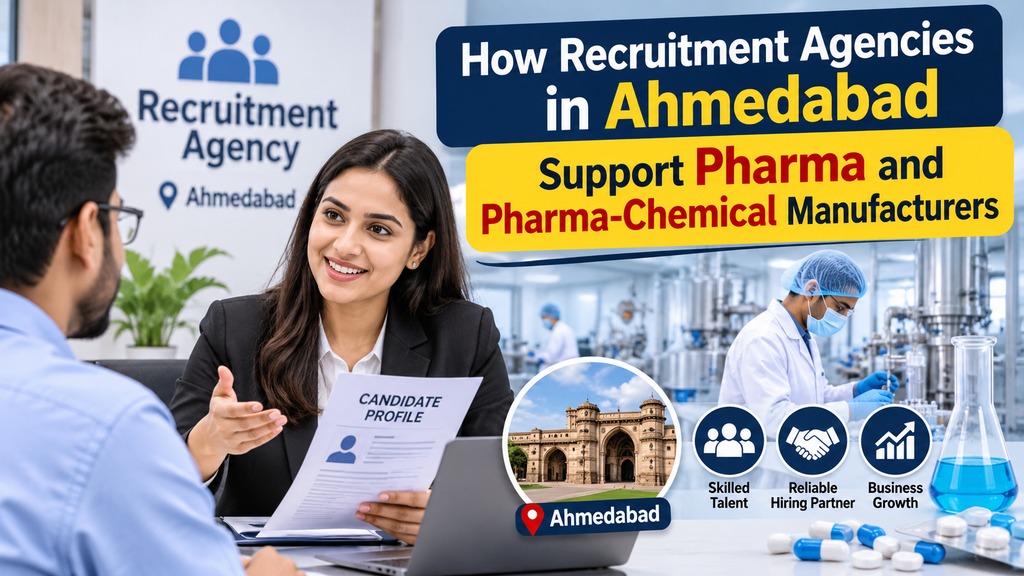
Walk through any pharma-chemical plant on the outskirts of Ahmedabad and you’ll notice something: the people who keep it running rarely show up on a standard job portal. Reactor operators. QC chemists who can read a batch record correctly at 2 a.m. Plant supervisors who know the difference, between a paperwork slip and a compliance crisis. A recruitment agency in Ahmedabad that works this sector exists because of exactly that gap. Most manufacturers only figure this out after a bad hire eats into a production cycle they can’t get back.
The friction isn’t abstract. Compliance rules shift. Skilled technical workers drift toward whichever cluster pays better that quarter. Generic hiring misses all of it. That’s why pharma hiring Ahmedabad has turned into its own niche rather than a footnote under general staffing.
The Hidden Cost of Generic Hiring in Pharma-Chemical Manufacturing
Companies underestimate what a bad hire really costs. Not just a wasted salary. A restarted training cycle, a supervisor pulled off the floor to babysit someone, sometimes a batch flagged for rework because a spec sheet got misread. Most of this traces back to one habit — hiring for availability instead of fit. Pharma-chemical production punishes that habit faster than almost any other industry.
A bulk drug manufacturer near Vatva needed six production chemists inside a month to meet an export order. HR posted wide, filled seats fast, moved on to the next fire. Three weeks later, two of those hires couldn’t interpret SOPs properly. A supervisor had to halt a line. The order slipped nine days.
That one shortcut cost more than the month’s entire recruitment budget.
What tends to go wrong, concretely:
- Mis-trained hires in compliance roles rack up 2-3x more documentation errors in their first 90 days
- Senior staff lose roughly 8-12 hours a week just correcting avoidable mistakes from new joiners
- Export-focused plants face audit flags when staffing gaps get patched with underqualified labor, which puts repeat orders at risk
Firms that lean on recruitment agencies ahmedabad pharma chemical manufacturers actually trust get pulled in early, not after the damage is done — and that timing is the whole point. Chemical manufacturing hiring handled reactively almost always costs more than hiring done with some forethought.
Why GMP and Regulatory Fluency Separate Good Hires from Bad Ones
Pharma-chemical manufacturing operates inside a regulatory cage most outside candidates don’t understand. GMP documentation. Batch traceability. Audit readiness. These aren’t extras tacked onto a job description — they’re the floor. Someone who looks sharp on paper but has never worked in a validated environment will struggle the moment an auditor walks the floor. And that struggle becomes the employer’s headache, not the candidate’s.
A formulation unit preparing for a WHO-GMP audit once hired a QA executive straight from an FMCG background. Strong resume. Confident in interviews. Zero exposure to deviation reports or CAPA cycles. During the mock audit walkthrough, basic documentation gaps surfaced that took weeks to fix, because nobody had screened for regulatory fluency — only pharma keywords on a CV.
A few questions that actually predict performance here:
- Can this person draft or review a deviation report unsupervised within 30 days?
- Have they sat through a real regulatory inspection, or only studied the theory?
- Do they understand how one unapproved process change can trigger a full compliance hold?
Resume keywords don’t predict regulatory competence. Real pharma chemical recruitment screens for audit exposure before the resume ever gets this far, which is exactly where most in-house pharma hiring Ahmedabad efforts fall short.
Plant-Floor Hiring vs. Corporate Hiring — Two Different Games
Hiring a finance manager and hiring a night-shift production supervisor are not the same exercise. Yet plenty of manufacturers run both through identical HR processes. Corporate HR is built for office-based competencies — communication, leadership language, culture fit. Plant-floor roles need physical stamina checks, safety protocol fluency, and shift compatibility that a standard 30-minute interview just doesn’t surface.
A chemical processing unit in Naroda learned this the hard way. Needed a night-shift supervisor, ran the candidate through the usual interview built for accountants and sales staff. He lasted five weeks. Couldn’t handle the irregular hours and physical demands nobody had actually asked him about. The plant went without proper supervision coverage for a month afterward.
Where the gap usually sits:
- Shift readiness needs an explicit check, not an assumed yes
- Safety protocol depth — real familiarity with PPE discipline and emergency shutdown, not textbook answers
- Physical and environmental fit changes the entire candidate pool compared to office hiring; heat exposure and chemical handling aren’t minor details
A recruitment agency in Ahmedabad that’s done this work builds separate evaluation tracks for plant-floor and corporate roles instead of forcing one template onto both. Manufacturers working with a recruitment agency ahmedabad partner that gets this distinction see fewer early exits — and the pharma chemical recruitment pipeline improves on both sides at once.
Retention Failure — The Real Reason Pharma Manufacturers Keep Re-Hiring
High turnover gets blamed on wages almost by default. Usually that’s wrong. The real cause is mismatched expectations, set the moment someone accepts an offer without knowing what shift rotation or overtime actually looks like. Reality hits within 90 days. They leave. Re-hiring stops being an occasional headache and becomes a permanent line item.
One pharma-chemical intermediates manufacturer hired four lab technicians over eight months — for what were really only two roles. Every one of them left within 60 to 90 days, citing unclear expectations around weekend shifts. Management kept blaming “candidate quality.” Nobody looked at the onboarding conversation itself. Total recruitment spend on those four cycles ended up higher than one properly structured hire would have cost.
What actually helps:
- Pre-offer transparency on shift, overtime, and safety exposure — before joining, not after
- Tracking 90-day attrition by role surfaces expectation mismatches faster than exit interviews ever do
- A short plant walkthrough before the offer stage cuts early attrition meaningfully in technical roles
Turnover isn’t a pay problem most of the time. It’s an expectations problem, baked in before day one. The recruitment agencies ahmedabad pharma chemical manufacturers rely on tend to build expectation-setting straight into screening, and chemical manufacturing hiring done this way simply keeps people longer.
Where T&A Solutions Fits Into This Picture
T&A Solutions operates within Ahmedabad’s recruitment ecosystem as one of several firms working specifically in pharma, pharma-chemical, and allied manufacturing hiring. Its presence points to a broader shift happening across the region — staffing providers building sector-specific screening frameworks instead of pushing every role through the same generic funnel. That’s a reflection of the operational problems covered above, not a pitch for any one provider.
Frequently Asked Questions
- Why do pharma-chemical manufacturers in Ahmedabad need specialized recruitment support instead of general staffing?
General staffing is not designed to check if someone knows Good Manufacturing Practices has been, through audits or is ready to work on the plant floor. Specialized hiring reduces the chances of making a hire because it actually looks for the things that general human resources teams often overlook.
- What roles do pharma-chemical manufacturers typically struggle to fill?
Production chemists, QA/QC executives, shift supervisors, regulatory affairs staff — these stay the hardest to fill well. Candidate pools for compliance-heavy roles are just narrower than most generalist hiring assumes.
- How does poor hiring affect compliance and audit readiness?
Underqualified hires in documentation-heavy roles produce more deviations and slower CAPA closures. Both show up fast during regulatory inspections and can delay export clearances.
- What’s the biggest driver of turnover in pharma-chemical manufacturing roles?
Mismatched expectations, especially around shift patterns and overtime. Transparent communication before the offer does more for retention than a raise ever will.