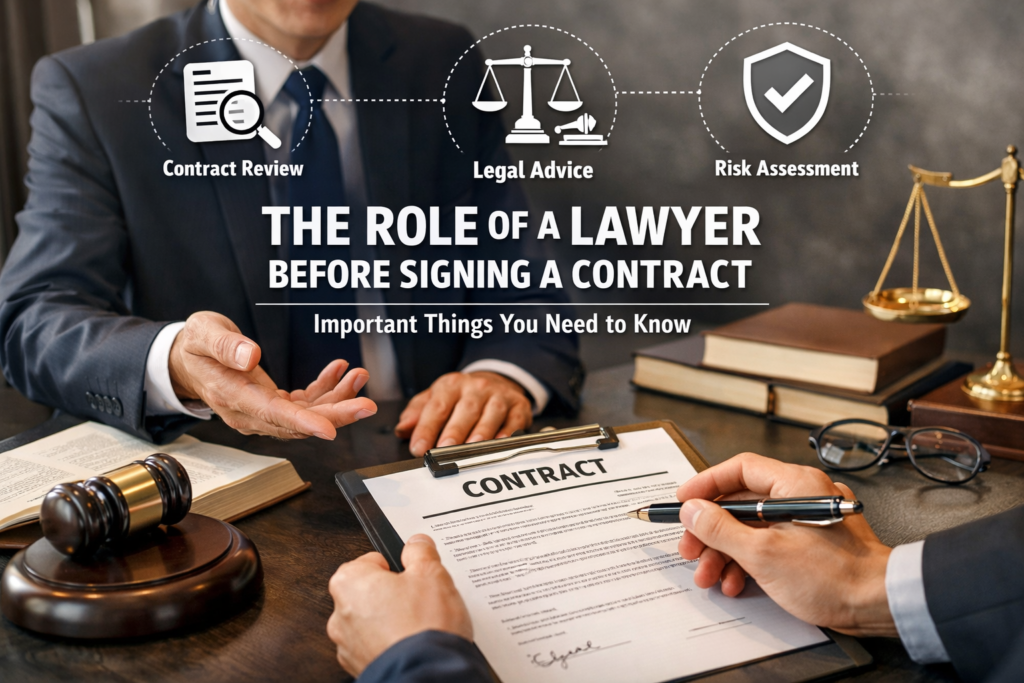
Business agreements are the backbone of every professional relationship. Whether you are working with suppliers, clients, investors, distributors, or partners, every commitment is ultimately defined by a contract. Yet, many entrepreneurs sign agreements without fully understanding the legal consequences hidden in the fine print.
In 2026, business is more global than ever. Contracts often involve multiple jurisdictions, international payments, and compliance with foreign legal systems. A single poorly reviewed clause can lead to financial loss, disputes, or even legal action in another country.
This is why involving a lawyer before signing any business agreement is not just a precaution; it is a strategic necessity. Legal professionals are trained to identify risks, interpret complex clauses, and ensure that your interests are protected before you commit.
In international business contexts, legal documentation often extends beyond contracts. For example, companies dealing with cross-border transactions may also require certified or legalized paperwork such as apostille documents to validate signatures and official records across different countries. Without proper legal guidance, these requirements can become confusing and lead to delays or rejection of important business processes.
This article explains why legal review is essential before signing any business agreement and how it protects your business in the long run.
Understanding What You Are Really Signing
Most business owners focus on the commercial terms of a contract, such as pricing, deliverables, and timelines. However, the real risks often lie in the legal clauses that are overlooked.
Contracts may include hidden obligations, automatic renewals, penalty clauses, jurisdiction clauses, and liability limitations that can significantly impact your business.
A lawyer is trained to analyze these details and explain what they mean in practical terms.
Without legal review, you may unknowingly agree to terms that restrict your flexibility or expose your business to unnecessary risk.
In international transactions, legal documentation becomes even more complex. Requirements such as apostille documents may be necessary to validate contracts or corporate records in foreign jurisdictions, and misunderstanding these requirements can delay operations or invalidate agreements.
Understanding the full scope of an agreement is the first step in protecting your business.
Identifying Hidden Risks in Contracts
Many contracts are written in a way that favors the party who drafted them. This is especially common in supplier agreements, franchise deals, and investment contracts.
Hidden risks can include unfair termination clauses, exclusive dealing restrictions, or unfavorable payment terms.
These risks are not always obvious to someone without legal training.
A lawyer can identify these issues before you sign, giving you the opportunity to renegotiate terms or walk away from a bad deal.
In cross-border agreements, legal risks can also involve documentation requirements such as apostille documents, which ensure that signatures and official papers are recognized internationally. Without proper validation, even a well-written contract may not be enforceable in another country.
Risk identification is one of the most important roles a lawyer plays in business.
Protecting Your Financial Interests
One of the biggest dangers of signing contracts without legal review is financial exposure.
Contracts may include clauses that impose penalties for delays, minimum purchase obligations, or unexpected fees.
These financial obligations can severely impact cash flow and profitability.
A lawyer ensures that payment terms are fair, enforceable, and clearly defined.
They also help structure agreements in a way that protects your financial interests in case of disputes.
When dealing with international contracts, additional documentation requirements such as apostille documents may be necessary to ensure that financial agreements are legally recognized across borders.
Financial protection is one of the core reasons legal review is essential.
Ensuring Compliance With Local and International Laws
Business agreements must comply with the laws of the jurisdictions in which they operate.
This becomes especially important in international trade, partnerships, and investment deals.
Different countries have different legal standards regarding contracts, taxation, liability, and dispute resolution.
A lawyer ensures that your agreement complies with all relevant legal frameworks.
Without this oversight, you may unknowingly enter into an agreement that is not legally enforceable.
In cross-border transactions, compliance often extends to document authentication. This is where apostille documents become relevant, as they certify the legitimacy of official documents for international use under the Hague Convention framework.
Legal compliance is essential for enforceability and business continuity.
Preventing Disputes Before They Happen
Most business disputes arise not because of bad intentions, but because of unclear agreements.
Ambiguous contract language can lead to misunderstandings about responsibilities, timelines, or payments.
A lawyer ensures that every clause is clearly defined and legally enforceable.
This reduces the likelihood of disputes and provides a clear framework for resolving issues if they arise.
In international agreements, unclear documentation can also create complications that require additional verification through apostille documents, especially when contracts must be validated in multiple countries.
Preventing disputes is far more cost-effective than resolving them later.
Strengthening Your Negotiation Position
Many business owners believe contracts are fixed once presented, but in reality, most agreements are negotiable.
A lawyer can identify unfavorable terms and suggest modifications that improve your position.
They also understand standard industry practices, which helps ensure that you are not accepting below-market or unfair conditions.
Having legal support during negotiations gives you confidence and leverage.
In international deals, legal clarity is even more important, especially when documents must be recognized abroad through processes involving apostille documents, which confirm authenticity and legal standing across borders.
Strong negotiation leads to stronger business outcomes.
Avoiding Long-Term Legal Liability
One of the most overlooked aspects of contracts is long-term liability.
Some agreements may hold you responsible for damages, losses, or obligations long after the business relationship ends.
Without legal review, you may unknowingly accept indefinite or excessive liability exposure.
A lawyer ensures that liability clauses are reasonable and limited.
This protects your business from future legal or financial consequences.
In international contracts, liability issues can become even more complicated when combined with cross-border enforcement and documentation requirements such as apostille documents.
Limiting liability is essential for long-term business safety.
Protecting Intellectual Property and Business Assets
Many business agreements involve intellectual property, branding, or proprietary processes.
Without proper legal protection, you may risk losing ownership or control over your intellectual assets.
A lawyer ensures that intellectual property rights are clearly defined and protected within the contract.
This is especially important in partnerships, licensing agreements, and franchising deals.
In global business environments, intellectual property documentation may also require validation through apostille documents when used in foreign jurisdictions.
Protecting assets ensures long-term business value.
Avoiding Costly Legal Mistakes
Legal mistakes in contracts can be extremely expensive to fix.
Once an agreement is signed, it becomes legally binding in most cases.
Correcting unfavorable terms after signing is often difficult or impossible without penalties.
A lawyer helps you avoid these mistakes before they happen.
This preventive approach saves money, time, and legal stress.
In international business, correcting documentation errors may also involve reissuing or validating apostille documents, which can delay operations and increase costs.
Prevention is always more efficient than correction.
Building Professional Credibility
Businesses that operate with properly reviewed contracts are seen as more professional and trustworthy.
Legal oversight signals to partners and clients that your business operates with structure and accountability.
This can improve your reputation and strengthen long-term relationships.
It also makes it easier to attract investors and strategic partners.
In global trade, properly validated agreements and supporting paperwork such as apostille documents further enhance credibility across jurisdictions.
Professionalism builds business confidence.
Conclusion
Signing a business agreement without legal review is one of the most unnecessary risks an entrepreneur can take. Contracts define your rights, responsibilities, and financial exposure, and once signed, they are often difficult to change.
A lawyer helps you understand what you are agreeing to, identify hidden risks, protect your financial interests, and ensure legal compliance across jurisdictions.
In international business, additional documentation requirements such as apostille documents add another layer of complexity that requires professional legal guidance.
Ultimately, legal review is not an expense. It is an investment in safety, stability, and long-term business success.
FAQs
Why do I need a lawyer before signing a business contract?
A lawyer ensures that you understand the terms and are protected from legal and financial risks.
What happens if I sign a contract without legal review?
You may unknowingly accept unfavorable or risky terms that are legally binding.
What are apostille documents?
They are certified documents used to verify authenticity for international legal recognition.
Are all business contracts legally binding?
Yes, most signed contracts are legally enforceable.
Can I negotiate a contract drafted by another party?
Yes, most business contracts are negotiable before signing.
Do small businesses really need legal review?
Yes, even small businesses benefit from legal protection and risk prevention.
What risks do lawyers help identify in contracts?
They identify financial risks, liability issues, and unclear legal obligations.
Is legal review expensive compared to potential losses?
No, legal review is usually far cheaper than fixing contract disputes later.
You should also read: TechAiTech