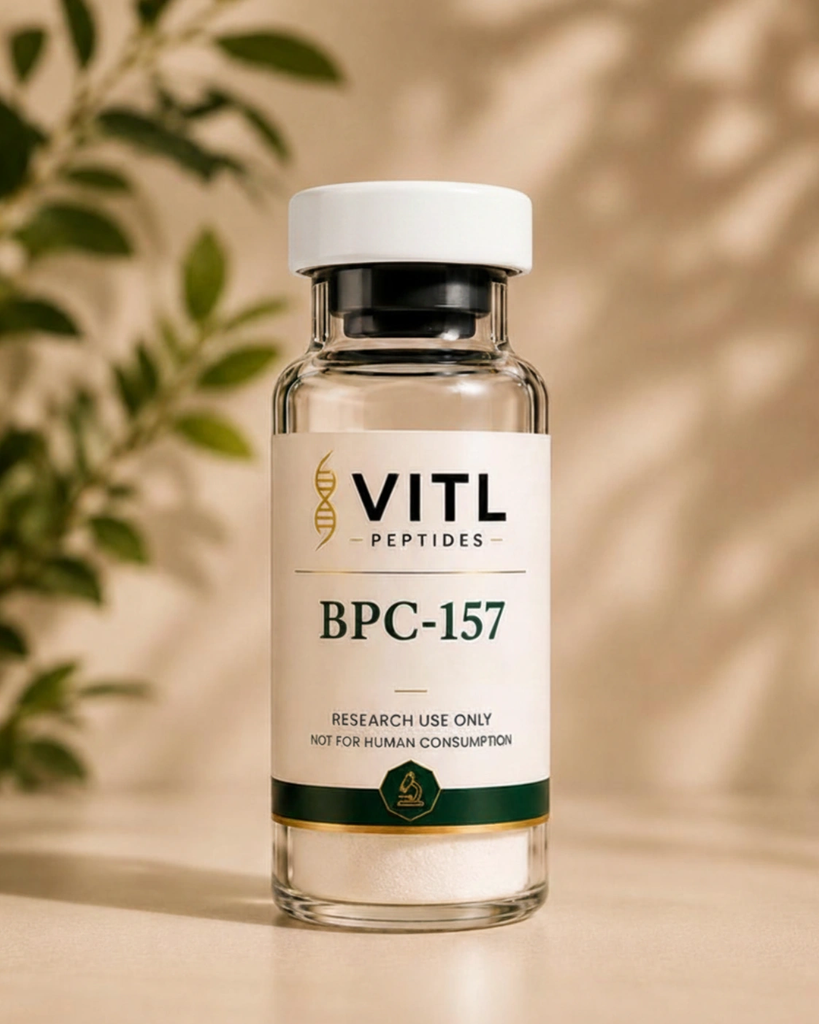
BPC-157 and TB-500 are two peptide-related research materials discussed in scientific literature concerning cellular processes and tissue-associated biological pathways. They are also available as individual research products and in combined formulations, which creates important questions about product identity, documentation and the interpretation of research findings. Buyers comparing a BPC-157 peptide for sale should distinguish the evidence associated with each compound from claims made about a blend containing both. Similar product names do not establish equivalent composition, quality or biological activity. A careful review of the available evidence and batch-specific documentation helps research teams make informed procurement decisions.
Understanding the Research Background of BPC-157
BPC-157 is a synthetic peptide consisting of 15 amino acids and is often discussed in preclinical research involving cellular signalling and tissue-associated biological processes. Published investigations have explored its activity in experimental models, including research related to gastrointestinal biology, vascular processes and tissue responses. Much of the available literature comes from animal studies and laboratory experiments rather than large, well-controlled clinical trials. These findings can help researchers identify questions for further investigation, but they do not establish that the same effects occur in humans.
The distinction between experimental findings and established clinical evidence is particularly important for BPC-157. Findings from a laboratory model depend on the model used, the endpoints measured and the conditions under which the research was conducted. They cannot automatically be applied to other biological systems or interpreted as proof of safety and effectiveness in people. The US Food and Drug Administration has also highlighted limitations in the available safety information for BPC-157-related substances in its reviews of proposed compounding ingredients. Researchers should therefore evaluate published studies and regulatory information rather than relying on promotional descriptions.
Understanding TB-500 and Its Research Context
TB-500 is a name used for a synthetic peptide product associated with research on thymosin beta-4 and related biological pathways. Thymosin beta-4 is a naturally occurring peptide involved in several cellular processes, including actin regulation, which contributes to cell structure and movement. However, the terminology used for TB-500 products can vary, and the exact relationship between a marketed product and a particular thymosin beta-4 sequence should be verified through its specification. Researchers should not assume that every product using the TB-500 name is identical to full-length thymosin beta-4 or to other related materials.
Research involving thymosin beta-4 has examined processes such as cell migration, cytoskeletal organisation and tissue-associated signalling. Evidence about the naturally occurring peptide, however, does not automatically establish the properties of every synthetic fragment or product sold under a related name. The FDA has reported that it did not identify clinical studies or human exposure data sufficient to establish the safety of TB-500 in its reviewed context. This limitation reinforces the need to distinguish research interest from demonstrated clinical outcomes.
Comparing BPC-157 and TB-500
Although BPC-157 and TB-500 are frequently discussed together, they should be assessed as distinct research materials. Their molecular identities, proposed biological roles and available evidence differ, so they should not be treated as interchangeable. Researchers comparing the two need to consider the specific compound, the experimental question and the quality of the supporting literature. A shared research category does not mean that the materials have the same mechanism or produce the same results.
The following points help organise a comparison:
- Molecular identity: Verify the stated sequence, molecular description and other available identity information for each material.
- Research background: Review studies involving the exact compound rather than relying on findings about a related peptide.
- Experimental models: Check whether the evidence comes from in vitro work, animal studies or human clinical research.
- Measured outcomes: Identify the actual endpoints reported by the study instead of relying on broad descriptions of its findings.
- Quality documentation: Review batch-specific analytical records and confirm that they relate to the material being considered.
- Evidence limitations: Note uncertainties, study limitations and the absence of sufficient clinical data where applicable.
These points help prevent research findings from being overstated. They also provide a consistent framework for comparing product records from different suppliers. Neither compound should be considered clinically validated simply because it has been investigated in experimental models. Conclusions should remain within the limits of the available evidence.
What Does a Combined BPC-157 and TB-500 Formulation Mean?
A combined formulation contains both compounds in a single product. VITL Peptides lists its Wolverine research formulation as a lyophilised blend of BPC-157 and TB-500 intended for laboratory research. The product listing identifies a 20 mg formulation and provides batch-related documentation for the listed lot. Buyers should verify the current specification and the amount of each component from the applicable product records rather than assuming that the total stated strength represents the quantity of each peptide individually.
The term Wolverine is a product or research-category label, not a recognised scientific designation that proves a particular biological effect. A combined formulation also raises questions that are different from those associated with either component alone. The relative amounts, identity of each ingredient, formulation characteristics and analytical testing all matter when assessing the material. Research involving the individual compounds cannot establish the performance or safety of the complete blend without evidence that directly examines that formulation.
When evaluating a combined research product, buyers should check:
- Ingredient identity: Confirm that both named compounds are included in the stated formulation.
- Component quantities: Look for documentation showing the declared amount of each component, not only the combined total.
- Formulation records: Check the product description, formulation identifier and applicable batch details.
- Analytical evidence: Determine which identity, purity or other tests were performed and whether they assess the individual components or the blend.
- Research limitations: Treat findings from individual compounds and the combined formulation as separate evidence categories.
These checks help clarify what has actually been purchased and what the available records can support. A combined product should not be assumed to offer additive, synergistic or superior activity merely because it contains two research compounds. Those possibilities require direct investigation using suitable experimental methods. Without such evidence, claims about the blend should remain descriptive rather than predictive.
Product Identity, Certificates of Analysis and Quality Checks
A certificate of analysis (COA) provides analytical information about a specified product or batch. Its value depends on the identity of the tested material, the methods used and the results reported. A statement that a product is independently tested is not a substitute for reviewing the actual documentation. Buyers should establish whether the report relates to the exact product and lot under consideration and whether it covers the quality attributes relevant to their research.
Before approving an individual peptide or combined formulation, review the following:
- Batch number: Confirm that the product label and COA refer to the same lot.
- Identity testing: Check whether the documentation supports the identity of the stated compound or compounds.
- Purity results: Review the reported result, method and acceptance criteria where available.
- Component-specific information: For a blend, determine whether the records identify and assess each ingredient separately.
- Additional testing: Establish whether other tests, such as endotoxin testing, are reported where relevant to the research requirements.
- Document status: Check dates, missing results and any qualifications attached to the report.
HPLC can help assess aspects of sample composition and purity, while mass spectrometry can support molecular identity assessment. Neither method alone demonstrates every aspect of product quality, and a reported purity figure should not be interpreted as proof of sterility, safety or clinical suitability. For combined formulations, buyers should pay particular attention to whether the analytical approach can distinguish the components and whether the reported results adequately describe the complete material. If the documentation does not answer a relevant question, request clarification from the supplier before approving the purchase.
Comparing Related Research Products
Research-material buyers may also encounter other products in a supplier’s catalogue, including Sermorelin research USA and a Semax + Selank research peptide. These materials have different research backgrounds and should be reviewed independently rather than grouped together solely because they are peptides. Each product requires its own identity checks, specification review and batch-documentation assessment. A supplier’s general quality statements should not be treated as evidence that every catalogue item has identical testing coverage or documentation.
A consistent review process makes these comparisons more reliable. Record the product name, stated composition, batch identifier, available analytical results and intended research classification. Where two products are being compared, make sure that the documents use comparable methods and report the same relevant attributes. Differences in available evidence should be recorded rather than treated as proof that one material is superior.
Interpreting the Evidence Responsibly
Scientific interpretation requires attention to the difference between a plausible mechanism and a demonstrated outcome. A compound may be investigated in relation to cell migration or other biological processes without having established clinical benefits. Similarly, a combination may be proposed for studying multiple pathways, but that rationale does not prove that the ingredients interact as expected. Strong conclusions require appropriate methods, reproducible findings and evidence relevant to the specific claim.
Regulatory status is another part of the assessment. Research-use-only labelling does not mean that a material is approved for human or veterinary administration, and a supplier’s product listing is not a substitute for regulatory authorisation. The FDA’s published assessments of BPC-157 and TB-500 describe important gaps in available safety information. Buyers should follow applicable laws, institutional policies and laboratory procedures, and should not use research-labelled materials as medicines.
Conclusion
BPC-157 and TB-500 have distinct research backgrounds, and the evidence associated with one should not be used to establish the properties of the other. Combined formulations such as Wolverine introduce additional questions about ingredient identity, component quantities, analytical testing and formulation-specific evidence. Reviewing the product specification and batch-specific COA helps buyers establish what the material contains and which quality attributes have been assessed. Research findings should be interpreted according to the methods and limitations of the studies, without assuming clinical benefits or proven effects from a blend. For questions about product specifications or available batch documentation, buyers can contact VITL Peptides.
Frequently Asked Questions
1. What is the difference between BPC-157 and TB-500?
They are distinct research materials with different molecular identities and research backgrounds. Their proposed biological roles and available evidence should be assessed separately.
2. What is the Wolverine BPC-157 and TB-500 formulation?
Wolverine is the name used for VITL Peptides’ combined research formulation containing BPC-157 and TB-500. Buyers should consult the current product specification and batch documentation for details about the formulation.
3. Does research on BPC-157 and TB-500 individually prove that the combined formulation works?
No. Findings about individual compounds do not establish the properties, safety or biological activity of a combined formulation. Those questions require evidence that directly examines the blend.
4. What should buyers check in a peptide certificate of analysis?
Check the product and batch identifiers, reported identity and purity results, testing methods and any relevant additional tests. For a combined formulation, determine whether the documentation addresses each component and the finished blend appropriately.
5. Are BPC-157 and TB-500 established treatments for human use?
The available evidence does not establish them as proven treatments for human use. Research-use-only products are not substitutes for approved medicines, and laboratory findings should not be interpreted as proof of clinical safety or effectiveness.