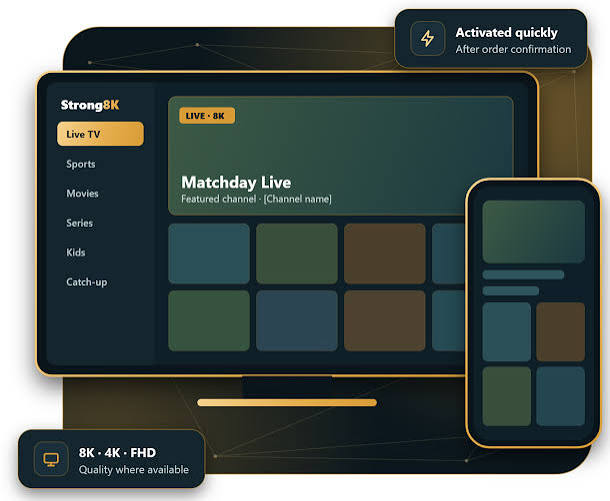
A short IPTV trial is most useful when it answers a few specific questions about a real viewing setup. Browsing menus at random can consume the available period without establishing whether the household can use the intended player comfortably. When evaluating Strong 8K IPTV, start with the authorized account conditions and the equipment that will actually be used. Identify the ordinary tasks that matter, record what happens and keep the result within the limits of the observation. A short check can reveal a practical problem; it cannot guarantee how every future session will behave.
Establish the conditions before starting
Read Strong 8K IPTV trial information and confirm the arrangement applicable to the actual request. Availability, eligibility, timing and permitted use need an applicable answer. Do not assume a grant merely because a trial page exists, or treat a purchased subscription period as an automatic trial entitlement. Ask when the permitted access begins and what preparation is required. If an independent player licence or installation question remains unresolved, address it before assuming that the access period can be used productively. A useful evaluation depends on an understood starting point rather than a rushed attempt to make every possible screen work.
Choose the household tasks worth checking
Imagine a viewer helping a partner learn a television player before deciding on a subscription. Their priority may be straightforward remote navigation and a small set of familiar programmes. Another household might need a particular language or a confirmed viewing overlap. Write down the requirements that would change the decision. Keep the list manageable enough to observe properly. A large catalogue or an opening screen can look encouraging while leaving the essential question unanswered. The evaluation should follow the household’s intended routine, rather than a tour through features the regular viewer may never use.
Identify the exact software route
Record the device model, operating system, full player name and relevant version. Distinguish the television displaying a picture from any connected equipment running the application. Match the confirmed account method to the selected player and consult the appropriate device guidance. If the visible fields differ from the relevant instructions, seek clarification instead of entering credentials into several unfamiliar applications. Keep independent software registration separate from service access. Establishing those roles makes a later issue easier to describe and avoids turning an unrelated player prompt into an assumption about the account being evaluated.
Check ordinary navigation with the intended viewer
Ask the regular viewer to open the application, find a familiar item and return to the main view using the actual controls. Observe whether the selected menu item and text are clear from the normal seating position. Do not demonstrate every button so quickly that the person never has to follow the route independently. If an accessibility adjustment is relevant, verify the documented option for the actual software. Record the observed difficulty specifically. An interface that feels unfamiliar may need a clearer explanation, while a mismatched guide presents a different question from a viewing-source problem.
A useful check includes recovering from an ordinary navigation mistake. The viewer might open an unfamiliar menu while looking for the previous screen. Follow the documented route back without altering private account fields or deleting stored information. Let the person repeat that action if appropriate. This small task can reveal whether the handover is understandable outside the ideal sequence. It should remain proportionate to the permitted evaluation. There is no need to manufacture faults, reset working equipment or explore consequential controls merely to make the test appear comprehensive.
Treat programme information and availability separately
If a guide or listing is part of the intended routine, check how the identified player presents and navigates that information where available. Keep the observation specific to the software and source used. Confirm essential programme, regional-feed or language requirements directly rather than infer them from a broad category label. A familiar name in a menu does not settle every future event or feature question. The household should know what was actually checked and which requirement still needs an answer before the subscription decision can be considered complete.
Record the viewing result without guessing its cause
Use the Strong 8K IPTV trial testing checklist to organize a concise account of the task, device, approximate time and observed result. If something fails, distinguish a player that will not open, a rejected account method and a particular item that will not start. Those stages lead to different questions. Where a documented comparison is appropriate, change one relevant variable at a time and remain within the confirmed allowance. Avoid treating one improvement as proof of a network diagnosis or permanent solution. Record the context that makes the observation useful to support.
Raise a genuine question through the right route
Provide the identified setup, symptom and relevant checks through the established support process. Use the appropriate private method when an account reference is necessary, and remove passwords, tokens and complete private account addresses from any screenshot. Ask a specific question that would help complete the original task. A player developer and service provider can have different responsibilities, so identify the unresolved part. Keep the reply with the evaluation notes and distinguish a suggested action from a result actually confirmed after following it.
Use a separate label for a requirement that was not checked. A viewer may spend the period learning navigation and never examine a language option or programme. That absence of evidence is different from a confirmed limitation. Record why the check remains open and which question would settle it. This keeps the decision honest without dismissing what the session did establish. The household can then ask for clarification instead of assuming that an untested feature worked merely because no fault was reported.
Make the decision from a bounded record
Summarize the requirements confirmed, the observations made and the material questions still unanswered. A successful short session is useful evidence about that setup at that time. It does not establish every source, device, feature or future condition. Conversely, one clearly documented problem can identify something important to resolve without proving the whole arrangement unsuitable. Compare any proposed order on its current terms after reviewing those findings. A deliberate trial assessment leaves the household with an explainable decision and a clearer support record, rather than a broad verdict based on an unstructured first impression.